
What does it take to Launch a Start-up: A Genius, or a Businessman?
Last week, our Director Cedric Maloux wrote about the trials and travails of hiring a CTO or a developer, for startups that have neither. Can a technology business thrive, even if it doesn’t revolve around a bona-fide technologist? Cedric is not exactly enthusiastic about the idea: “It depends,” he says.
Companies that started as purely technical projects, supported by little more than the geeky-obsessive interests of people who would only later be labeled “founders,” are legion of course.
Why Business Oriented Might be Bad
Extreme devotion to your ideals can produce amazing results in time.
Larry Page and Sergey Brin saw the genesis of Google as fodder for a research project, which they co-authored, replete with fascinatingly unprescient commentaries as “We have designed Google to be scalable in the near term to a goal of 100 million web pages,” and “we expect that advertising funded search engines will be inherently biased towards the advertisers and away from the needs of the consumers.” and absurdly understated ones like “We are optimistic … that there is a bright future for search.”
Their technical-single mindedness, and academic backgrounds, even led them to conclude, as a result of their research into the structure of their proposed search engine (Google was then more a mathematical design concept than a business), would be best served by remaining an academic project- implying that it was too fraught with ethical complications to become a real business.
Ethical complications or no, however, Google did become a business. A rather enormous and complicated, and profit motivated business. But would it have risen above the fold of a market then defined by get-rich-quick, morally flexible business approaches that were driven almost exclusively by profit incentive, rather than product and concept integrity?
It’s not an unfamiliar trajectory for a number of highly successful web projects that grew up, and became truly influential, following the tech bubble of the late 1990s.
Mark Zuckerberg, had he been anything but what he was, which can safely be described as not business oriented, would have viewed the potential market for social networking in 2003 with a jaundiced eye. The market was dominated by Myspace, an offshoot of a firm with an ignominious reputation for developing malware and spam delivery mechanisms centered around internet pornography sites, and had been built in a matter of weeks to explicitly ape the most popular features of Friendster, a less cynical, but perhaps less aggressive competitor. Myspace was then by some measures the most popular website in the United States (this was at a time in which the US still dominated international web traffic volume). It’s hardly a surprise that few were even considering taking on Myspace in its own market. Of course, Zuckerburg’s potential business partners had their own questionable judgement to consider.
Just as Brin and Page viewed search as fundamentally broken by the prevailing advertiser model, Zuckerberg clearly saw the social networking world as fundamentally broken for most of the same reasons. And yet his competitive nature drove him to enter the fray as an alternative that was based upon delivering desired results, with no eye to short-term profitability. This in a time in which an investor would have seen MySpace’s market dominance as a strong disincentive to enter the fray. Indeed, even when Peter Thiel did sign on as a Facebook investor, he had to wait 5 years for the company to reach profitability. It had been dominant in its market for several years before it ever became cash flow positive. That’s not a bet most investors would make, and with good reason.
Why Business Oriented Might be Good

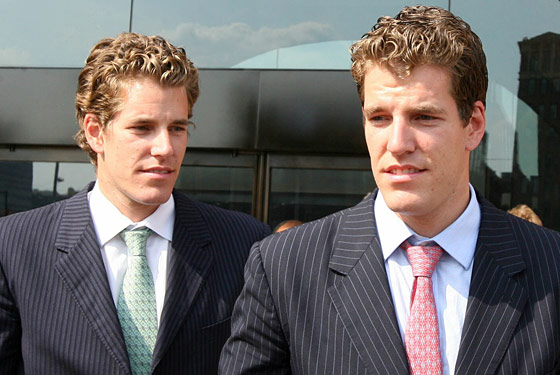
Technical co-founders can get a little… carried away.
The startup landscape of 2014 takes lessons from these successes, but should also pay equal attention to the drawbacks inherent in the approach that, while it worked in the long run for Brin, Page, and Zuckerberg, has sunk or failed to fuel the growth of thousands of would-be titans. For every Amazon, a company that manages, even if barely, to keep its revenues just above its costs as it continues to expand, there is a Pets.com, a company that loses more money, the faster it grows.
I caught up with Damian Brhel this week, from Brand Embassy, a startup that entered StartupYard in 2011. When asked if a business-oriented approach is an asset, even to a fledgling startup, his answer was an enthusiastic yes (lightly edited):
Can a non-technical background be an asset for a founder of a tech company?Damien: Sure, absolutely! Most startups fail because of sales, because they simply does not understand it. Maybe you can have awesome product, but if you don’t know how to market it, you’re gonna fail. However both have to be balanced – I can not imagine a tech company without a co-founder who has tech insight. I’ve seen a few and they have no idea how to develop, or how much it will cost, and that cause huge inefficiency. Plus, it’s not just product + sales, it’s also many other ordinary things such HR, formal bureaucracy, operations, finance management, intellectual property, law, etc – these are areas where many startups are not aware (and many tech guys don’t know them at all).
While it’s a popular trope to imagine that a technical wizard will accomplish the Zuckerbergian feat of creating a product that will somehow justify its own existence through sheer quality, mass appeal, or perfect timing, allowing the technical genius never to have to dirty his hands with business concerns, the realities of launching most products preclude that from ever being a reality.
In fact, the landscape of the technology business over the last 30 years suggests just the opposite: that the true titans had most of their greatest accomplishments thanks to brave and insightful business strategies, and thanks less to their technical accomplishments. It’s was the great triumph of Microsoft to license DOS to IBM, but they didn’t write DOS themselves. And it was the great accomplishment of Apple to push a consumer facing operating system in the 1980s, but the genesis of that idea came from the Xerox PARC, a technology that had been around for nearly a decade, with Xerox failing to grasp its potential.
A survey of the Forbes top 100, selecting only for purely tech companies, bears out the notion that the biggest tech companies are built on strong business credentials. Samsung, though it’s been around in some form since the 1930s, didn’t become a true technology company until it was consolidated by its Chairman Lee Kun-hee in 1987, an MBA from George Washington University. The story is much the same for Apple, Siemens, IBM, and others.
Exceptions in most areas are very common: Dell, Cisco Systems, Google, and Oracle were all started by prototypical computer geeks, but a common thread emerges: most of these tech-founder companies experienced their initial growth in specialized markets, and expanded into new verticals later on, while the largest companies entered the market in several verticles, more or less at once.
And the biggest growth occurs when a team is being led by someone who can make business decisions that reach beyond the level of product, and deal with the company’s place in the market- whether that CEO is a founder or not.
No One Road to Success

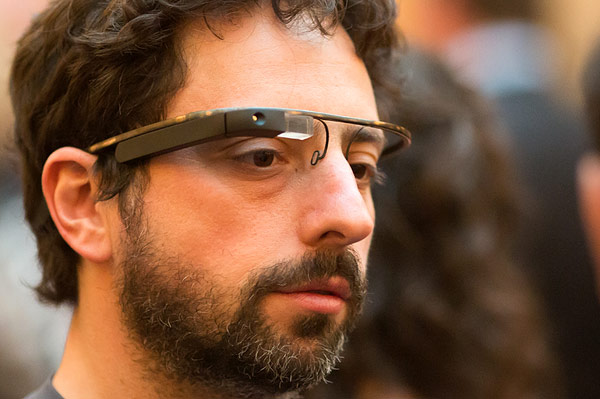
Also no explanation for this man’s career.
Perhaps the singular key to success among these purely technical teams was excellence, combined with adaptability. As Jobs found out in the 1980s, and Zuckerberg may yet discover, the key to survival is to adapt, and making wise business decisions, inasmuch as they may compromise the vision that a singular founder has for his products and his company, is vital for continued growth.
[ssba]