Which Came First? The User or the Network?
It Takes: “#invites/users * #acceptedinvites > 1” to Tango
Andrew Chen wrote a fascinating piece recently on habit forming feedback loops. I suggest you read it. I’ll wait.
Alright, well if you haven’t read it, Chen focuses on 3 key types of “feedback loop” that are essential to growing a social app’s user base, and subsequently increasing its value.
Here are the 3 types of feedback loops he outlines:
-
A feedback loop that rewards content posters when they push new content into the network.
-
A feedback loop that rewards passive content consumers with relevant and valuable content.
-
A feedback loop that rewards (and culls) connections within the network.
Cracking the Chicken and the Egg Problem

But how did they GET THERE?
As we’ve been finding a lot with our current cohort of startups, many appear to be confronted with a chicken-and-egg conundrum. Namely, they will need engaged users to create content and keep the platforms viable, and they will need content to win engaged users. This is a sticky wicket that many social and mobile platforms are currently struggling with. Which of these things comes first? And at first blush, it looks insurmountable. How do you get the equation: “#invites/users * #acceptedinvites > 1” to work when you can’t inspire users to invite friends, and you can’t inspire friends to accept the invitations?
Failing to execute a user-feedback strategy that follows Metcalf’s Law, as Chen points out, will cause the opposite effect to take place: a social network that is losing users is losing value, meaning it loses more users, and is accelerating its loss of value.
However, there is hope.
All Your Base Don’t Belong to Us
I think a fair bit of this startup anxiety about growth comes not from lack of self-confidence in the startup’s abilities, but from pride. In a world of startups where the “me too” pitches flow like Hollywood scripts, a lot of founders are probably afraid of being perceived as derivative, rather than innovative. They tend to see their potential social networks as essentially divorced from, rather than dependent on, the existing ecosystem of competitors. But that isn’t the case at all. The fact that there are 10 Million users in your product category already is a good thing, because it means there are users looking for a product like yours, and there are sure to be a fair number of people who will want the innovation you provide over an established competitor, whether it’s in price, efficiency, or a host of other areas. As we say, if you don’t have competition already, you almost certainly have no market, just a piece of technology looking for a problem.

Tending An Unwalled Garden
So it’s important to understand, if you want to initiate feedback loops that will actually continue to grow, a number of things about your market and your target users. And it’s also important to understand how those users differentiate themselves. Luckily, most of the users a new social network would want to attract are *already* seeking the features or the community your new network would provide, and they are probably already doing what your network will allow them to do more cheaply, more quickly, or more efficiently. Your garden needs to have doors to other networks- they just need to be in the right places.
There are 3 basic types of users for a social network, one for each type of feedback loop: the content creator, the content curator, and the “lurker,” or content consumer. They’re often described as following the 1/9/90 spread, meaning that there are 9 curators for every 90 consumers, and 1 creator for every 100 total users. That means on any typical social-based app or platform, 1% of users will actively generate compelling content (hopefully), 9% will engage with that content actively (sharing, curating, editing, recommending, commenting), and 90% will view the content, and take no other actions.
Each of these user groups carries out a vital function, and their activities feed each other’s loops. Each social-based network has particular strengths. A content creator can be rewarded for the total size of her audience (Youtube profit sharing is an example of this), encouraging her to create more similar content. At the same time, viewers can be rewarded by a cornucopia of fresh content that they enjoy, presented to them every time they log in. Content curators, editors, mavens, and social butterflies, the 9% of users who can be relied on to share knowledge with others, can be rewarded in a few ways: some networks, like Facebook, reward this type of behavior with positive reinforcement: your attempts to join the conversation garner positive likes, making you feel like a content creator, without the hard work involved in actually creating the content you comment on, or share. Others reward this behavior through enhanced perception of status: followers on Twitter, or a rough prestige score, or a rank, such as those employed by some fan forums, or curation-heavy services like delicious and Scoop.It.
Keeping these three interests in balance is an important, and ongoing process. Facebook users will recall the deluge, reaching its peak around late 2012 and early 2013, of “content creators,” who were actually content curators sharing memes and jokey posts on Facebook, in an effort to drive ad-supported clicks to their sites: 9-gag, Upworthy, and others were the biggest culprits of this kind of “click-bait” exploitation of the Facebook platform. They were leveraging real content curators, the users who enjoy sharing with friends, to gain access to passive viewers. Facebook responded by raising the barriers to virality for that kind of content: stopping shallow or non-rewarding content from swamping the typical newsfeed.
Respect Your User’s Roles
It’s important to keep in mind that most of your users will not want to be active creators of content, or to take any active roles, in a social platform. A lot of founders are probably in the smaller cohort of curators and content creators, and don’t empathize with passive users. And this doesn’t just apply to startups looking to create social platforms. The ghost-town that is Google+ fell victim to a super-user mentality that was baked into its product DNA , and from which it has never recovered. When Google+ was ready to switch on for ever user, even forcing users of affiliated services to have a Google+ profile, there remained no focus on rewarding them for the types of users they were. It remained an exclusive club, that everyone was forced to attend. When Google’s attempts to enforce their own culture on their users don’t come off as corny, they seem frightening. That’s not how you want to be perceived.
Don’t be *that* app
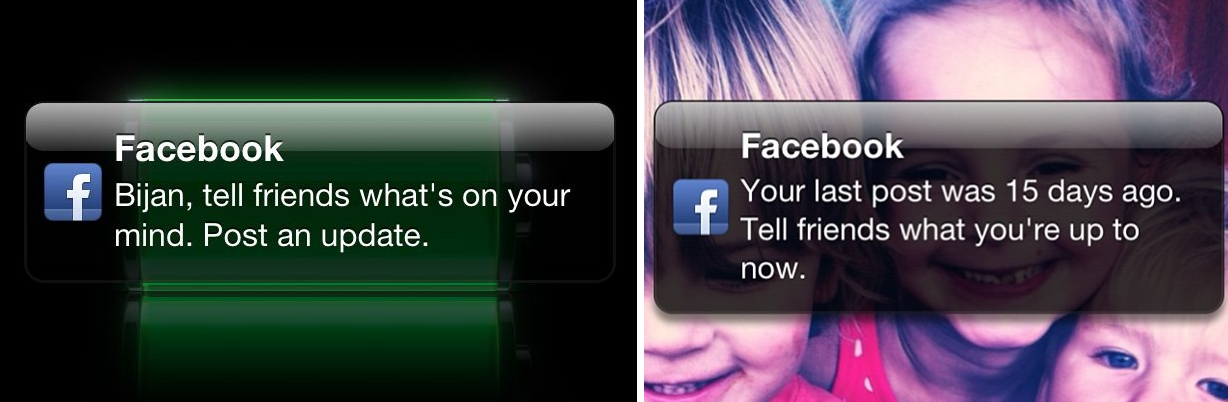
Instagram and Facebook both focus deeply on the rewards users get from generating content, but they don’t pester their users with reminders to use the service. Content creation is both stupidly easy, and uncannily rewarding. Others, Twitter for example, offer virtually no rewards for content creation, de-emphasizing depth of content through artificial restrictions, but focus heavily on curators, pushing their few active curators to gain followers and increase their profile, and leveraging large numbers of passive browsers to make that process rewarding. Still, Twitter allows its user-base to segment itself easily, relying on hashtags to make curating and browsing content seamless, and encouraging special interest communities to form in ways they can’t on Facebook. Interest is prioritized over relationships from user to user. The mix that you attract will be unique to your platform, but the platform should still be balanced toward the 1/9/90 paradigm, or it will likely not grow organically.