VC Andrej Kiska: Czech Investors Not as Conservative as You Think
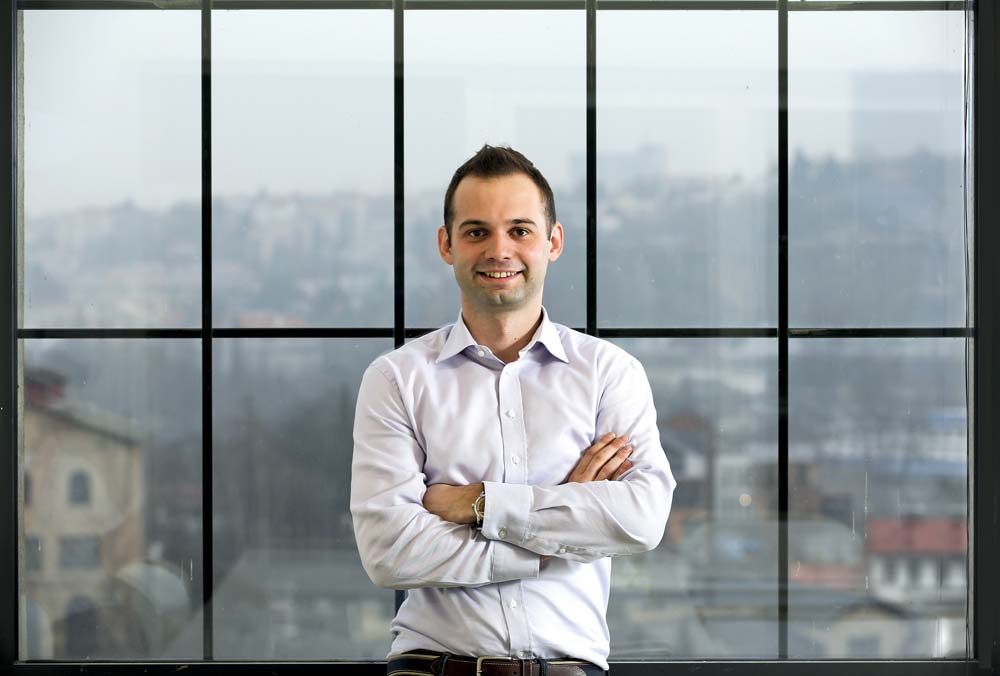
Andrej Kiska is a StartupYard mentor, and a partner with StartupYard backer and prominent central european venture capital firm Credo Ventures, joining in October 2011, originally on a part-time basis. Andrej is also a private equity analyst at Benson Oak, where he focuses on early stage investments.
Andrej graduated from University of Virginia’s McIntire School of Commerce with concentrations in finance and management. Andrej is the son of the prominent entrepreneur, philanthropist, and current President of Slovakia, Andrej Kiska Sr.
Over the next few weeks, the StartupYard blog will feature a series of articles penned by Kiska on investments and investment strategy for startups, from a VC and angel investor perspective. If you don’t want to wait for them to be republished here, you can read Kiska’s fantastic blog on Medium.
Hi Andrej, why don’t you tell us a bit about your background, and how you came to be a partner at Credo Ventures?
After spending five years in the United States and graduating from college there, I wanted to come closer to home and ended up joining a Prague-based growth fund Benson Oak Capital. I had a pretty incredible time with Benson Oak, since we managed to execute the only IPO of a Czech company at the New York Stock Exchange in the history of our country, AVG Technologies. We were the first investors back in 2004 when AVG had about 3 million dollars in revenue, and it went public in 2012 with more than 350 million dollars in revenue. Thanks to AVG I witnessed the fact that companies from Central Europe can indeed become global, billion dollar behemoths. Benson Oak invested in Credo Ventures in 2011 and I joined the team in 2012 to help more companies achieve similar successes as AVG did.
About how many investments have you looked at in your 4 years with Credo Ventures. Of the companies you’ve invested in, what are a few things that make them stand out?
We see about 600 business plans a year, so it is in the thousands. Yet, we invest in less than 1% of what we see. This is because there aren’t too many companies like AVG, with a product that is in some way unique on a global scale with a team that has the capability to deliver the product to a global audience.
How has the landscape changed for early-stage investments in the Czech Republic since you started with Credo?
A: Back in 2010-2011 we would receive only about 300 business plans a year. But it is not just the startups. There were no accelerators, or coworking spaces, and very few angel investors. Heck, even Startupyard didn’t exist back then 🙂 The community has grown radically since then.
Where do you hope to see Credo Ventures in the next 5 years?
I hope we can create another AVG. The sale of our Cognitive Security to Cisco has shown that our startups can attract the attention (and a lot of cash:)) of the largest technology players in the world. I am confident that the stars of our portfolio can become the next Ciscos themselves.
What would you say is the biggest misconception that startup founders tend to have about your job, and about venture capitalists in general?
I am not sure about general misconceptions, but I really enjoyed the surprised faces of entrepreneurs when they visited my apartment. I guess they expected a big pad or a villa, but the truth is that for the past six years I lived in a living room in an apartment with two roommates. Now that I am starting a family, however, that lifestyle has come to an end.
It is entertaining to see entrepreneurs realizing that many venture capital investors are not extremely wealthy guys who work for an hour or two per day while sipping margaritas at their swimming pool.
You were educated in the US, and you write quite a bit about how Central European startups can compete with US startups. Do you think the local ecosystem is getting better in this regard? How so?
I think it is getting better only very gradually, and I don’t think this pace is going to change significantly in the next couple of years. The truth is that the overwhelming majority of startup founders we see have no prior exposure to building a product and a team with global potential. These things can in my opinion only be learned on the job, i.e. by doing them.
Therefore, until we will have a generation of founders with prior exposure to global startups as early employees or at least with a few attempts to build a global startup (and ideally succeeded at it), the ability of our startups to compete on a global scale will grow only gradually. We need to build a generation of Jakub Nesetrils, early employees (or founders) of successful Central European startups such as Good Data who decide to start their own startup and know how to do it. These people can then crush it on a global scale like Jakub is doing with Apiary.
Creating such generation will take time, and, of course, money. And I think we are heading in the right direction. Nonetheless, the one thing which is good today and has has not changed over the past five years is the fact that we are continuously able to find heavy R&D teams in Central Europe that are able to invent unique technologies. While turning these technologies into a product and then delivering it to a global audience remains a big challenge for these startups (and one that we at Credo are trying to help to mitigate), companies like Cognitive Security, Comprimato or Codasip serve as great examples that this can indeed be done.
We often hear that Czech and European investors in general are “too conservative.” Do you think this is accurate?
I think one could actually argue the opposite. In my opinion, most of the startups that Czech investors invest in would not receive an investment in the United States at a stage when Czech investors are willing to invest. From this perspective I could make the claim that Czech investors are actually more liberal than their Western European or U.S. counterparts.
That’s an interesting point. But we hear this all the time- it’s almost a cliche now that Czech investors are overly conservative. So why do you suppose that this criticism is so often leveled at Czech investors?
I think it is a result of very effective marketing of U.S. startup success stories. The buzz around companies like Snapchat, Whatsapp or Tinder makes it look like as if startups in the U.S. effortlessly raise money with no traction and nice powerpoint presentation, while back at home conservative Czech investors require user base, revenue and financial projections.
But let’s take a deeper look for example at Snapchat. It received its seed funding of USD 500k in mid 2012, same year it achieved 50 million snap views per day. If there is an app in Central Europe with no funding that boasts 50 million interactions per day, I would be very happy to give it 500k as well. As a matter of fact, I would give it much more than that. At Benson Oak we invested in an Israeli startup with 40 million users 7 million dollars.
The criticism leveled at Czech investors comes especially from startups, which are misled by awesome self-promotion capabilities of the U.S. startup ecosystem. And this should be a lesson learned for our ecosystem: we are terrible at self-promotion. Look at AVG. On the day it went public, the prime focus of the Czech media was on the fact that shares went down on first day of trading, mostly ignoring the fact that there was no other company in the Czech Republic that even managed to IPO at the New York Stock Exchange. What do the Czech media say now, when AVG is trading 75% above its IPO price? Nothing. And that’s a big shame.
The Czech Republic has taken some steps, such as lowering the costs of incorporation, to be more competitive with Western European and American startups. Has the government here done enough to lower barriers to entry for startups and investors like Credo?
Current “direct” steps such as lower costs of incorporation are marginal improvements that don’t make or break a startup. We learned how to handle all of bureaucratic nuances of the Central European region by now anyways and can navigate these waters for any startup in our portfolio. I think the government will do enough if it simply doesn’t interfere with the ecosystem that is able to take care of itself.
If the government wants to help, the form of such help should be more indirect and long term: encouraging entrepreneurial spirit in young people and eliminating the negative connotation (and economic impact) of failing, motivating more people to invest in startups, providing better education that will help entrepreneurs compete globally and so on.
What are some specific governmental policies that you would like to see improved in the Czech Republic to allow the local startup ecosystem to compete on the world stage?
I don’t think any governmental policy will dramatically improve the quality of the startup ecosystem, at least not in the short term. The quality of the ecosystem will increase gradually as the ecosystem will gain more experience with competing on the global markets, there are no shortcuts around that.
When it comes to long term initiatives, which I mentioned above, they require more of a mindset than specific policies. Let’s take encouraging entrepreneurial spirit. I heard some people in Slovakia say that Slovak Aeromobil has been the biggest boost to Slovak national pride since we won the Hockey Championship in 2002. I loudly applaud the fact that Aeromobil received government support: it will be tough to turn it into a sustainable business, but has done a tremendous amount of promotion of entrepreneurship in Slovakia. Or look at my father (the president of Slovakia) taking promising Slovak startups to Silicon Valley. I am very much looking forward to the day when Mr. Zeman [President of the Czech Republic] is going to pick promising Czech startups and take them to the Valley.
It is not easy for a government to think outside of the box, but that’s exactly what it needs to do if it wants to be helpful. How come Sweden has allowed autonomous cars on some of their streets? How much talent and innovation could we attract if we build an autonomous car zone/ecosystem in Mlada Boleslav?
We recently interviewed Ondrej Krajicek on this blog, and he pinpointed education policy and immigration as key areas of public policy that demand attention in order to foster innovation in the Czech Republic. Does the Czech education system put Czech entrepreneurs and investors at a disadvantage today? What about immigration policy?
A: Surely a lot can be done in both areas. With that being said, we invested in multiple university spin-offs already, one of them was already sold to Cisco and others are doing very well, so I guess at least something in education at the university level must be going right.
In terms of immigration policy: this is obviously a big topic in Europe today, but has been in the U.S. for decades. It is fairly easy to answer from the point of view of startups: yes, we want as much as free movement as possible, so we can attract the best talent to the Czech Republic or move to the U.S. when our business demands it. Yet, looking at it from a holistic point of view, the solution becomes a lot more complicated e.g. if you have 200,000 immigrants (of whom many are unskilled or in unproductive age) heading to European Union annually.
You often write about company culture and organization as a key aspect of competitiveness for Czech and Central European startups. Does the Czech Republic have unique deficiencies in terms of company culture and employment habits or traditions? How should these be improved?
Well, Central Europeans are simply Central Europeans. We are affected by decades of collective ownership, distrust in entrepreneurs of the 90s and a host of other peculiarities. These obviously impact how we go about building businesses. We are proud when we rip off the state by optimizing taxes and frown upon people whose startup idea didn’t work. Many of us are hesitant to share the stake in our business with our employees. Or prefer owning a big stake in a smaller business as opposed to a smaller stake in a potentially bigger business. We want to be either CEOs or corporate employees, not early startup employees. We think we are going to win the World Hockey Championship every year, even though we are ranked number 8 in the world. But I guess that’s just Slovakia.
I think these traits make us who we are, there is nothing to feel ashamed about. As we try to compete in the global marketplace, we have to learn how to leverage our culture and skillset to turn it into a strength, not necessarily how to change it or improve it. Slovak startups for instance might want to consider buying a big TV for the hockey champs to boost team bonding (and don’t have to worry about loss in productivity since this tournament doesn’t last long for our team). But this is for every startup founder to figure out on his own.
You can Tweet Andrej @Kiskandrej