StartupYard’s 2015 Applications Are Now Closed. Here’s What We Learned.

StartupYard closed its applications on Monday for the March 2015 accelerator round. As you probably know, 10 teams will now be selected by a careful selection process, and these teams will receive €30,000 and spend 3 months in our mentor-driven accelerator at Node5. In addition, €250,000 will be available for follow-on seed financing for the teams that show the most promise through the course of our program.

We’re excited to get started, and we hope you are as well. We can tell you that we received over 200 applications in total, which is 4 times the number we received for the last round. and that most countries in Central Europe were represented.

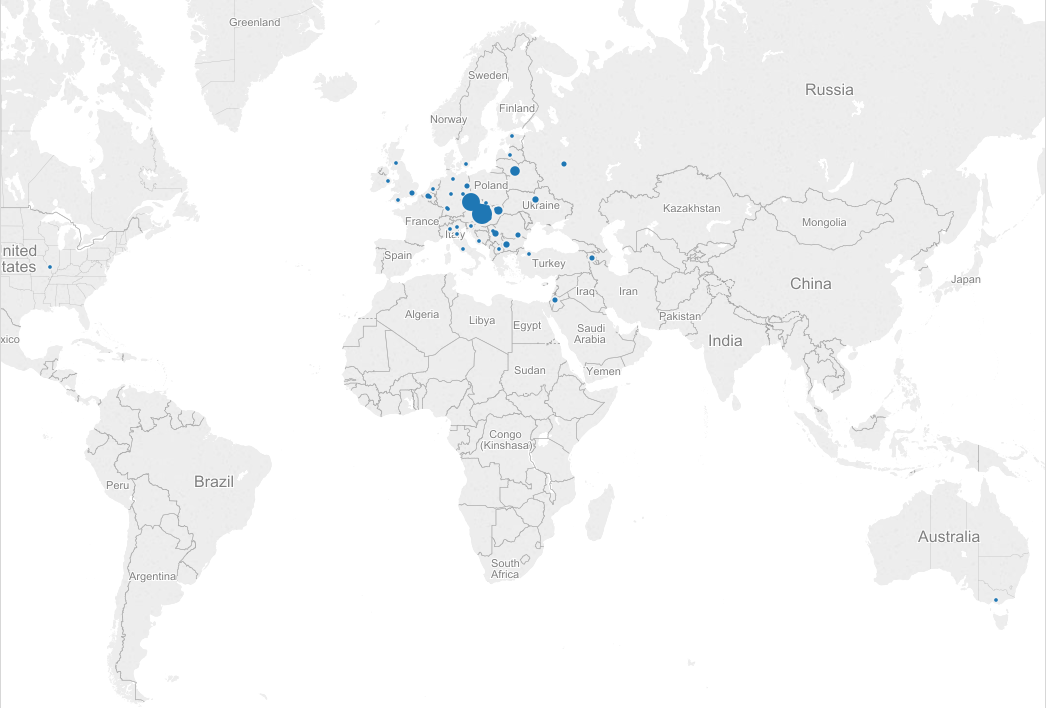
Here is a map of applicants:

Screen Shot 2014-12-17 at 18.15.55

Where did Applicants Come From?

We were certainly not surprised that, combined, over half of our applicants come from the Czech Republic and Slovakia. Interestingly, Slovakia in total provided the most applicants of any country, with the capital, Bratislava, submitting 30 applications on its own. We had expected this position to be occupied by The Czech Republic, with the largest number of applicants coming from Prague, our home base. Nevertheless, just these two countries combined submitted more applications than our total for last year, and each far exceeded their application numbers over the previous round.

We also saw applicants in significant numbers for the first time from The UK, Germany, and Italy, 3 countries in which we did not focus promotion for StartupYard.


What Surprised Us?

With an increased interest in all things Startupland, as demonstrated by Startup Lithuania’s impressive presentation at Slush this year, Lithuania was the surprise dark-horse winner for 3rd most applicants. With all of them coming from Vilnius, that city out-applied Brno, and Kolosice, the two second largest cities in The Czech Republic and Slovakia, respectively. Lithuania’s applicants approached 10% of our total, thanks in part to their promotion of StartupYard to their early stage startups. If these teams are anything like what we saw in Helsinki, we’ll be happy to have them at StartupYard.

It was also a slight surprise that we received no finished applications from Poland at all. But on the other hand, Poland is forging an important and powerful argument for its own accelerators, many of which do work very similar to our own. We had hoped for a few applicants from Poland, but we did not focus our energy on recruiting there.

A breakdown of the applicant totals per country.

A breakdown of the applicant totals per country.

What Have We Learned?

Tripling our seed funding this year doubtless increased interest in StartupYard as an option for early stage startups.  So just as the total number of applicants increased, so did the volume of communication we received. Both via email and in person at conferences and events across Europe, we encountered some new questions. I plan to write about these more in an upcoming post, but I’ll briefly mention them here.

What is an Accelerator to You?

As tech accelerators are becoming more common in Europe, and in Central Europe, shared concepts and methodologies are still being hashed out. At the Numa Accelerator Summit last week, for example, it became clear that European accelerators do not often even agree on what the mission of an accelerator is, or on what metrics we should measure our success.

In France, for example, startups seem to view accelerators more as incubators, with dashes of seed funding and a bit of guidance. This is reinforced by the growth of “corporate accelerators” in the region, which draw their talent from the corporate workforce, and not necessarily from self-starting entrepreneurs. These “accelerators,” function more as in-sourced R&D teams that are segmented away from their typical corporate structures, to give them a measure of freedom- but not too much. Few others at the summit took entrepreneurs as young as StartupYard’s, and I did not talk to any others who ran as intensive a program as we do.

Differing Expectations

A common reaction to StartupYard’s investment terms in Finland and France, where I have spoken personally to dozens of startup founders was shock: “10% equity?” I had this reaction from startups who compared our equity terms to those of TechStars, which is not a constructive comparison to begin with. A few of the same teams who reacted with shock to our terms also revealed that they had not been accepted to TechStars, which is much larger than StartupYard, and also requires that a project be much further along. Others were still bootstrapping their products, and had no investors- yet they worried over an equity stake, as if there was a great deal of money already in play.

We’re serious when we say that for us, the team is the most important thing. We have seen projects change drastically in our program, and that is often because teams join us at a time where our mentors have the greatest chance of a positive influence on their direction. So comparing us with an organization that gives twice the money we do, and takes half the equity, is not really appropriate- especially when that program only takes teams that have very evolved proofs of concept. At StartupYard, we invest money in your team so that you can make it through 3 months with us, and have a chance to build some runway, and get more investors. Our investment of greatest value is our mentorship, and our time- not the funds or perks that we provide.

Don’t get us wrong here: there is enormous value in what larger accelerators do, and the startup ecosystem needs them. But it needs us too. And for a generation of people who are now being taught that entrepreneurship is how they will craft the future and build their careers, outreach to younger startupers is needed now more than ever.

In Bucharest, in Vilnius, in Bratislava and in Prague, this is a message that is reaching the right ears. Entrepreneurs in these regions are hungry for opportunities like the ones we offer, and investors are keen to connect with those types of people. In western Europe, the situations is more complex. There are probably thousands of young entrepreneurs in France, the UK, Germany, and Poland who need and want exactly what we provide, but in these larger markets, the message of what an accelerator does seems to be dominated by the money, and by the few accelerators who give the most. It’s not surprising, but it’s definitely a new and interesting challenge for us, as we are arguing our case, more and more, in a broader conversation about what our mission should be.

As we grow as an accelerator, we too will have access to more investors. We too will become more selective. That is how we will best be able to serve our local ecosystem, and our own investors. We have to grow as our region grows. But we need to make a strong case now for the accelerators and incubators who will follow us down this path- that the kind of work we do is still vital, and will be vital in the future, even if we ourselves move on and grow past it.

 Infographics for this post were made with Tableau. It’s a cool tool, so check it out. 

What StartupYard Has Talked About This Year

At StartupYard, we take blogging seriously. And with good reason. StartupYard has received a lot of press in the last year, and every one of those media mentions relies on information represented in our blog. Our blog gives our applicants a feel for what we do, and what we are all about. And that’s apparently a good thing, because we’ve quadrupled our applicant pool compared to our previous round of acceleration. Having attended plenty of startup events this fall, I can tell you that a number of people I met had become familiar with me, the startups we accelerate, and with StartupYard, through the pages of this blog.

As an open source community, this channel of communication will play an even more important part of what we do. We posted over 70 times last year, on topics ranging from interviews, company profiles, opinion pieces, and news.

But you may have missed one or two of them. Well we forgive you. To help you catch up, here is a list of some of our most popular posts, sorted by category and date.


Tips and Tools for Startup Life

News About StartupYard


Interviews with Mentors and StartupYard Teams


The StartupYard 2014 Open House at Node5 A Success

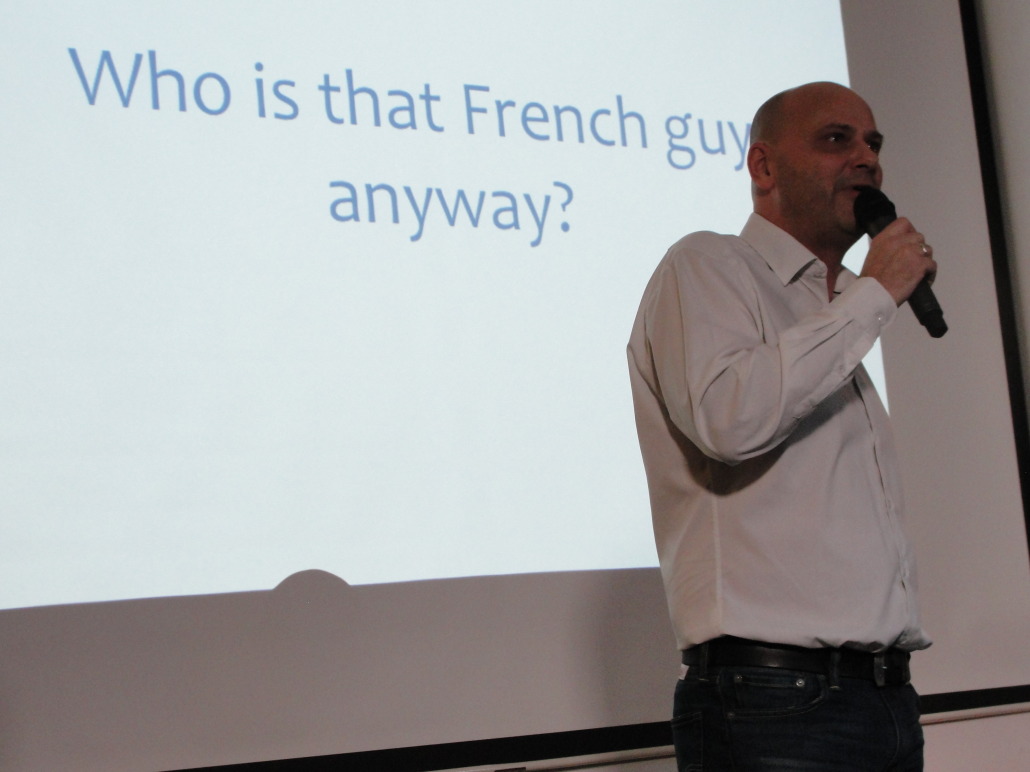
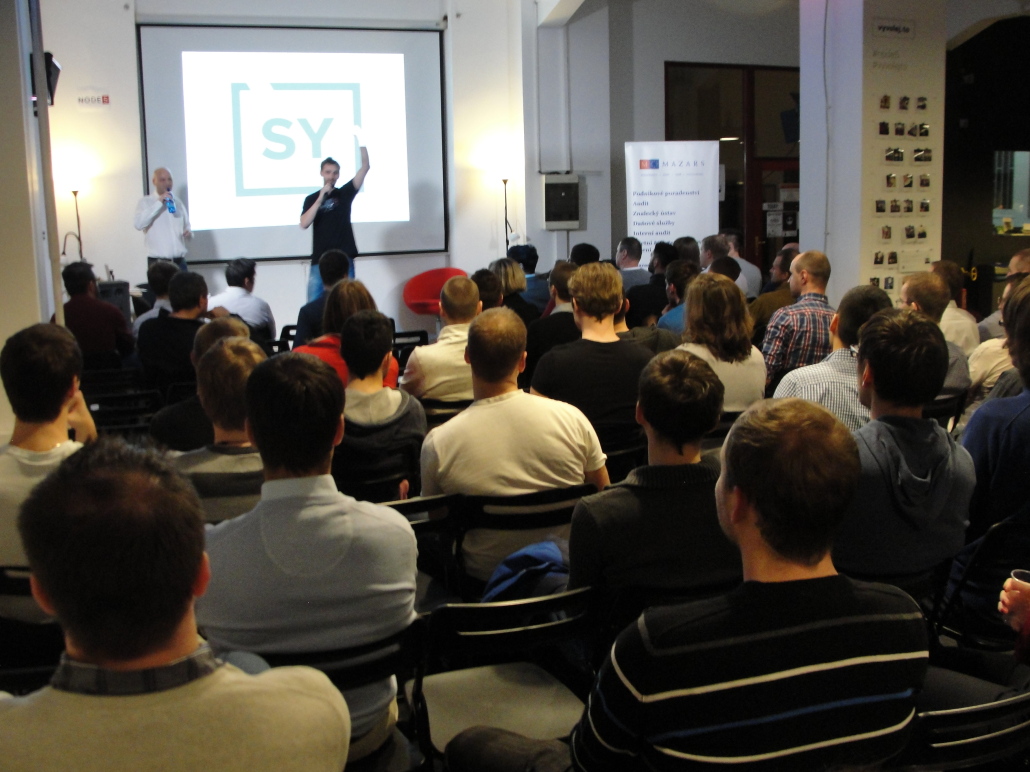
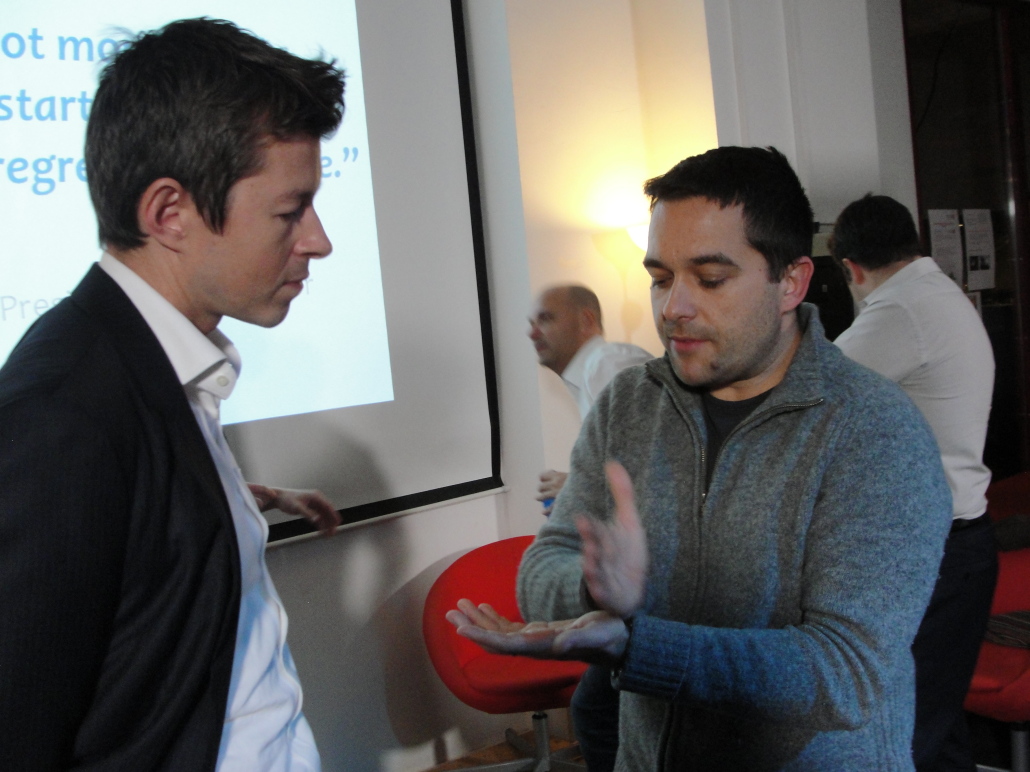
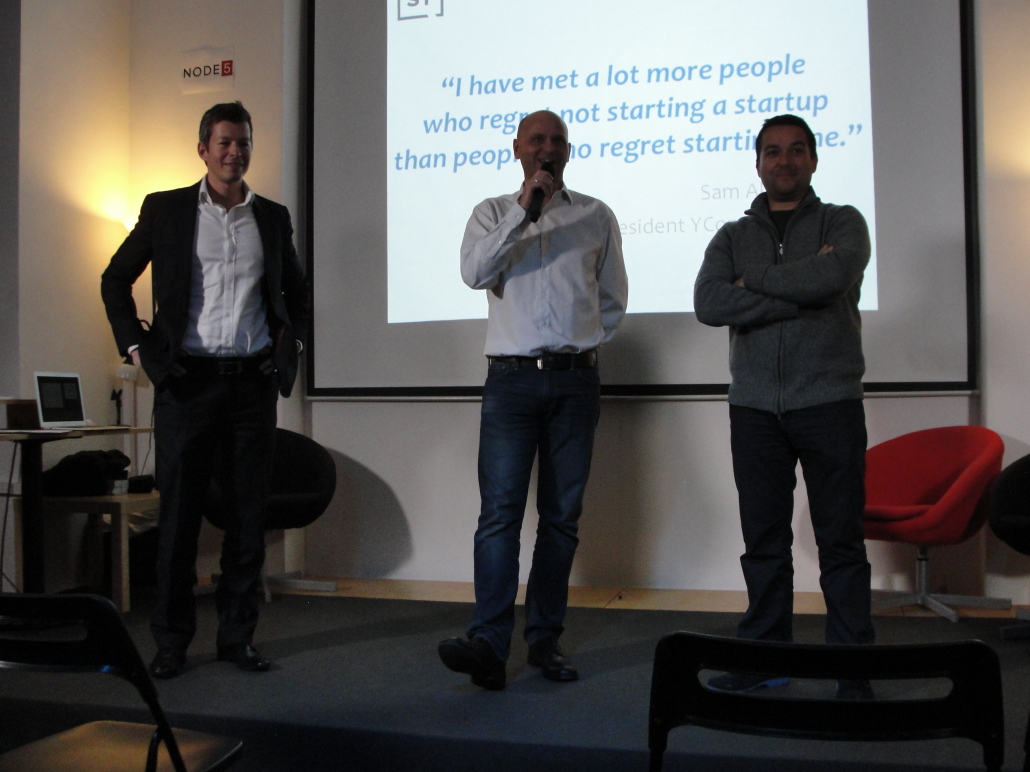
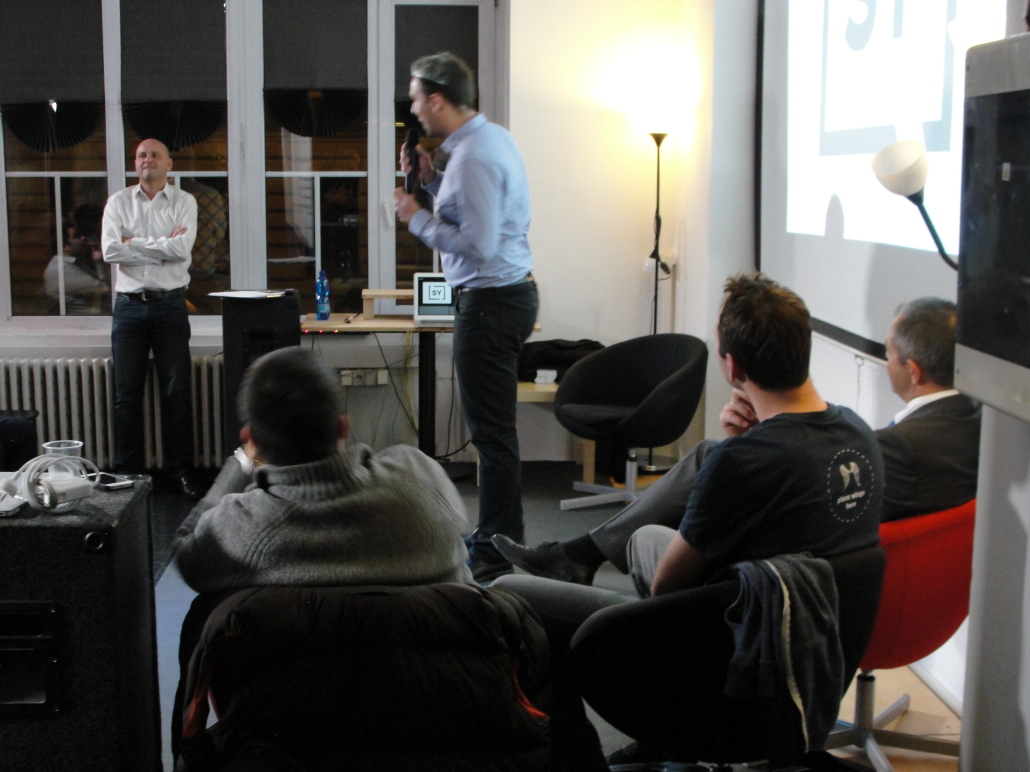
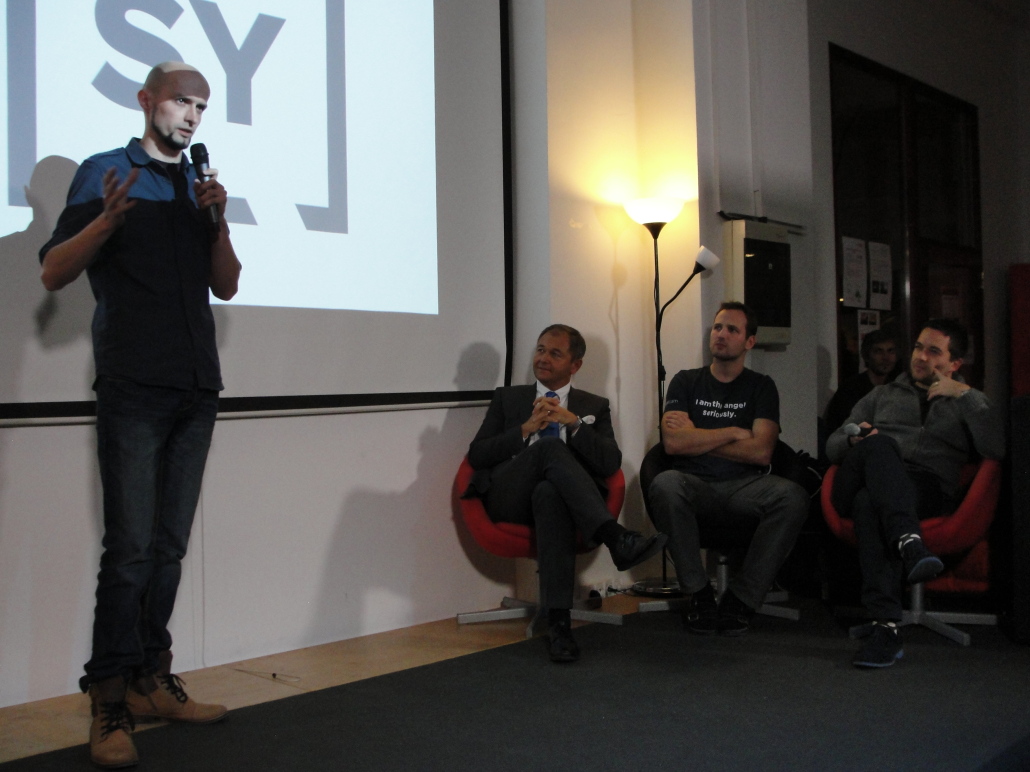
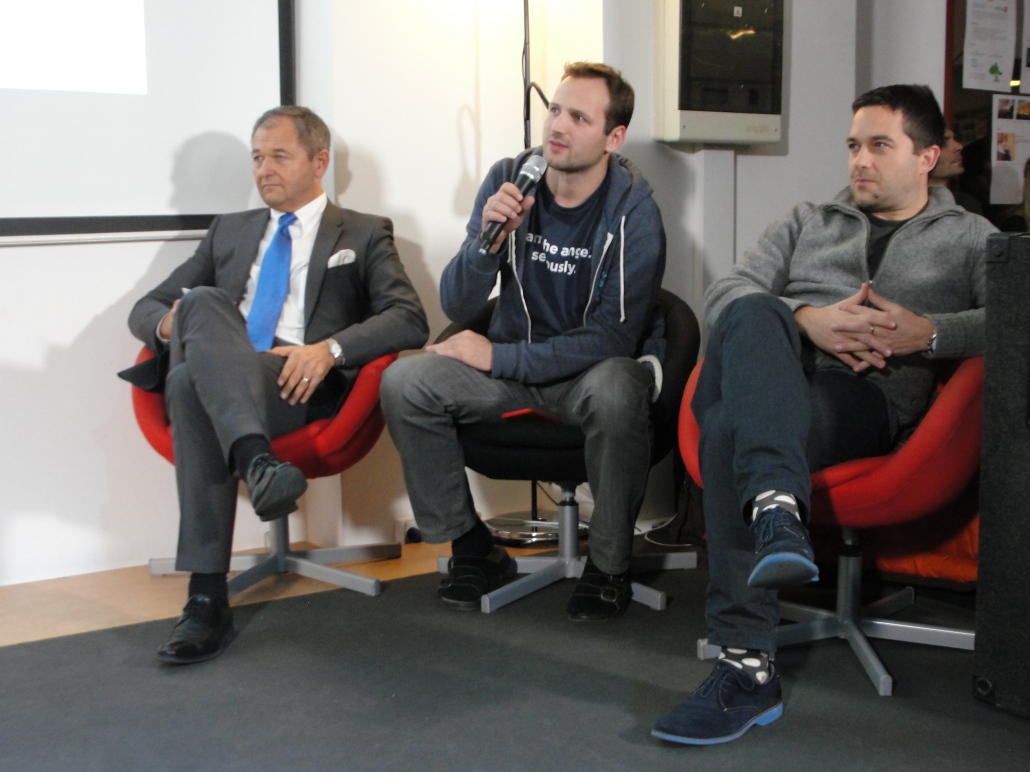
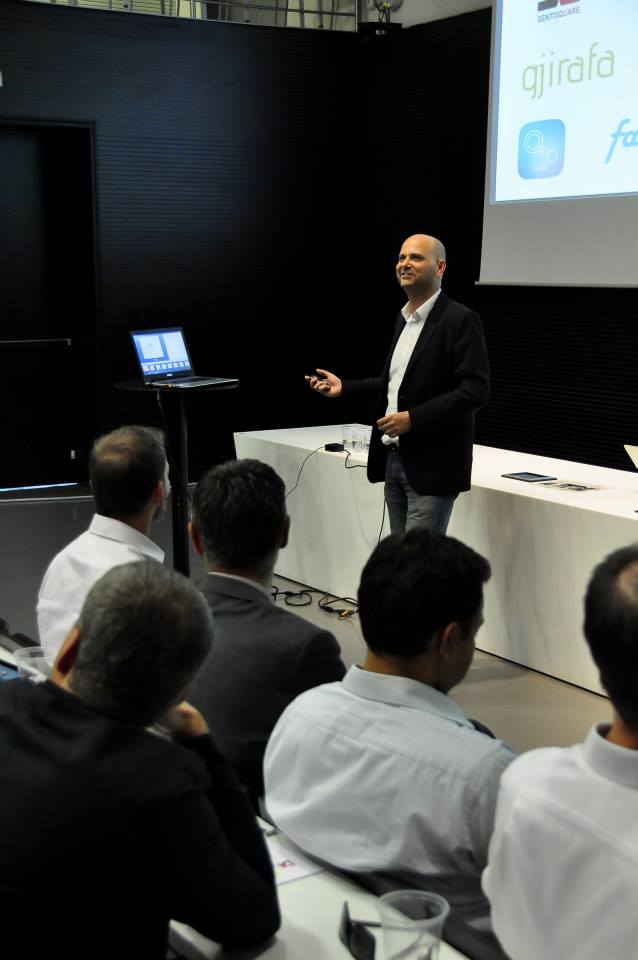
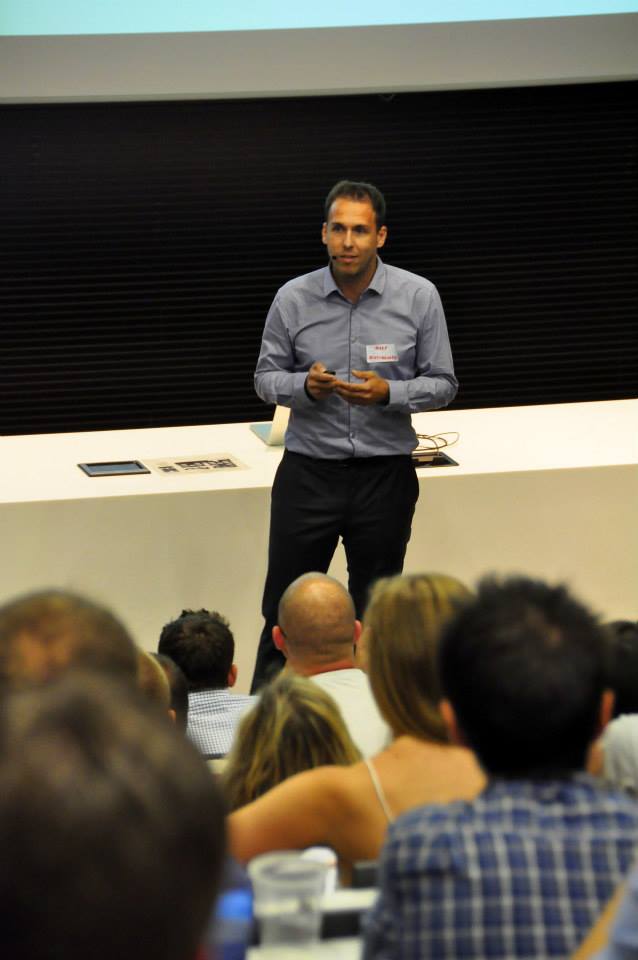
The StartupYard 2014 Open House was a big success. In front of a packed house of over 100 guests, startups, mentors, and investors, Chairmain of Microsoft Europe Jan Muehlfeit and StartupYard Managing Director Cedric Maloux held forth, while our panel of StartupYard mentors reviewed 8 pitches from local startups.

Wayra gave us a little love as well:


Jan Muehlfeit

DSC03356

Muehlfeit, who is stepping down from his role as European Chairman at Microsoft to take a more active public role in “unlocking human potential,” spoke for about 40 minutes. Topics ranged from education, to issues of labor and creativity in the digital economy. He shared a few anecdotes about his friend and colleague Bill Gates, and about his career with Microsoft, which is ending this year.  Muehlfeit plans to work as a “mentor, coach, and trainer,” as he puts it, for entrepreneurs and technologists around the world, to unlock human potential. He will start as a senior strategic advisor for  the private equity fund Atlantic Bridge, and will lend some of his time in the coming year to advising StartupYard’s incoming teams.

Muehlfeit covered a broad range of topics during his address. We live tweeted his talk, and here are a few of our takeaways:


 The Pitch-Off

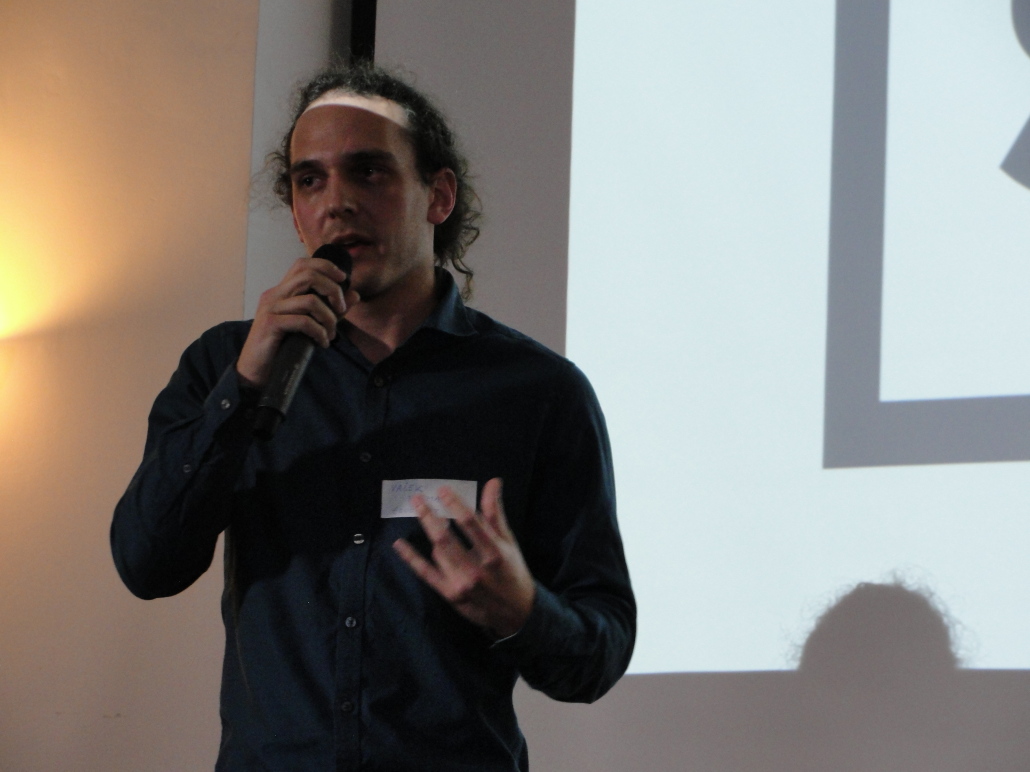
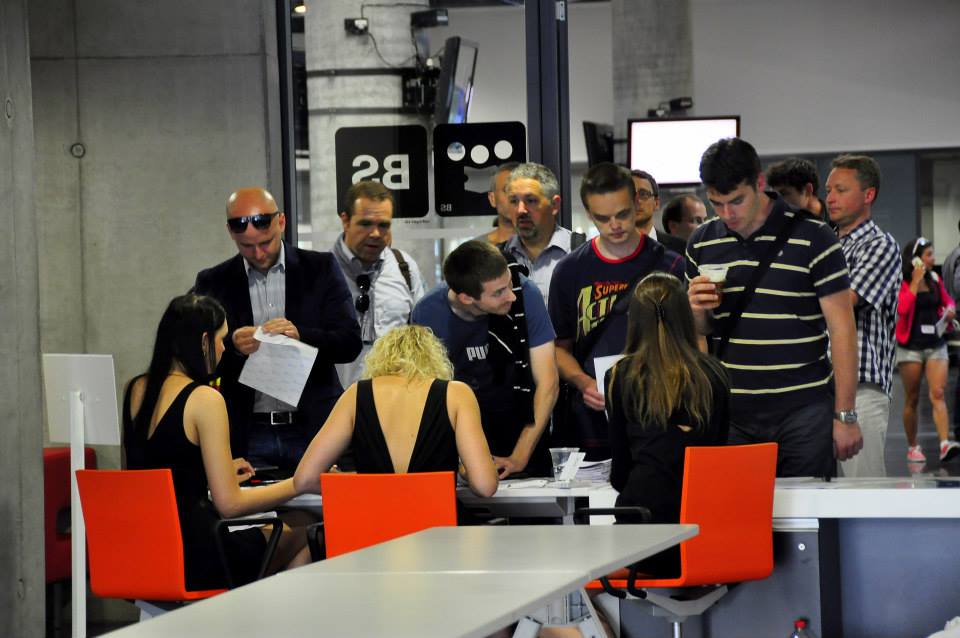
We were pleasantly surprised at the number of applications we received for the pitch-off, in which 8 entrepreneurs pitched theirs startup ideas to Muehlfeit, and our other mentors in attendance: Ondrej Bartos, of Credo Ventures, and Petr Ocasek, a StartupYard co-founder and CEO of AngelCam. Over the coming week, we will write a bit more about how the pitching went, and about the process we used to select the pitches that appeared at the pitch-off. Here is a quick overview of the pitches, along with their self-descriptions:

Factorify

Factorify is an SaaS for manufactures and small and medium-sized factories which want to be more effective and be able to plan, calculate and track everything. We want to bring inovation and flexibility to production.
 

hotcar.io

The HotCar.io application reveals the history of used car advertisements, puts the data insight into used car market and shows often car defects so the customers can negotiate the best price and minimize risks for the used car they are eager to buy.
We also provide market benchmarks, analytics and demand/offer program for used car sellers.
Moreover, we would like to do a Full Customer Service – we search, inspect and ask for a discount on a car/car type specified by a customer.
 

shards.io

Shards.io is aiming to provide a real-time BI over large amount of structured and semi-structured data. Our stack of technologies includes a distributed storage able to run on commodity hardware or cloud infrastructure and web-based UI for data analysts.
 

Portadi

Portadi helps workplace teams manage access to cloud apps with minimal effort. Portadi increases compliance and visibility into access rights to cloud apps and minimizes the security risks of distributing sensitive passwords to users.Each team member gets a custom dashboard with their team or company cloud apps or websites. Users don’t see app passwords, they simply sign in with a single click and land right in the web application.Portadi gives team managers and business owners the definitive answer to who can access which cloud app or website and provides a centralized audit trail. Portadi exposes how each apps is utilized allowing team managers to optimize paid subscriptions and better assess ROI of app purchases.
 

f8

F8 provides a two-way sync between the world of documents (meeting minutes, brainstormings, project documents, business analysis documents, theses, etc.) with the world of personal task management.It significantly reduces the time overhead keeping those two worlds in sync (e.g. distribution and tracking of meeting minutes actions, agenda preparations, etc.).Its target audience are project managers, analysts, writers, students and possibly more.
 

Datlowe

We are trying to provide a top class text processing tool which enables users to get information out of texts, search the texts better, and classify them. DATLOWE digs really deep into the language providing us with the structure of sentences. It means we understand the text well. We know what words are subjects, predicates, objects, etc. and how they depend on each another. Combining these information with smart dictionaries allows us to extract more information with higher precision than most of the competing methods.
 

SentiSquare

A StartupYard alum, SentiSquare discovers the most important topics in social media content and automatically produces summaries of the topic-related comments. It’s a “sentiment analytics” engine that will revolutionize the way global brands engage with their customers online and offline.


Educasoft

Education and content platform, Educasoft, maker of MyPrepApp and Hrave.cz another StartupYard Alum, took this pitching opportunity to announce that they have closed a funding round, and are focusing on the Czech market, soon to be followed by other Central European markets. 
 

StartupYard Announces Strategic Parternship with Mazars

DSC03498

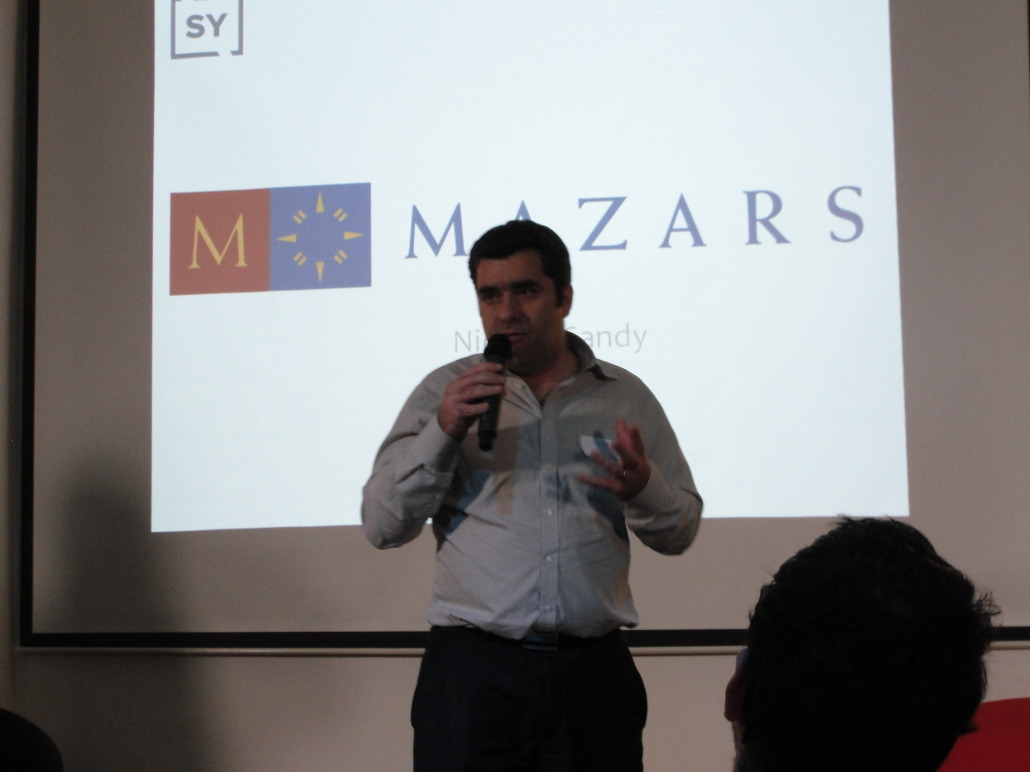
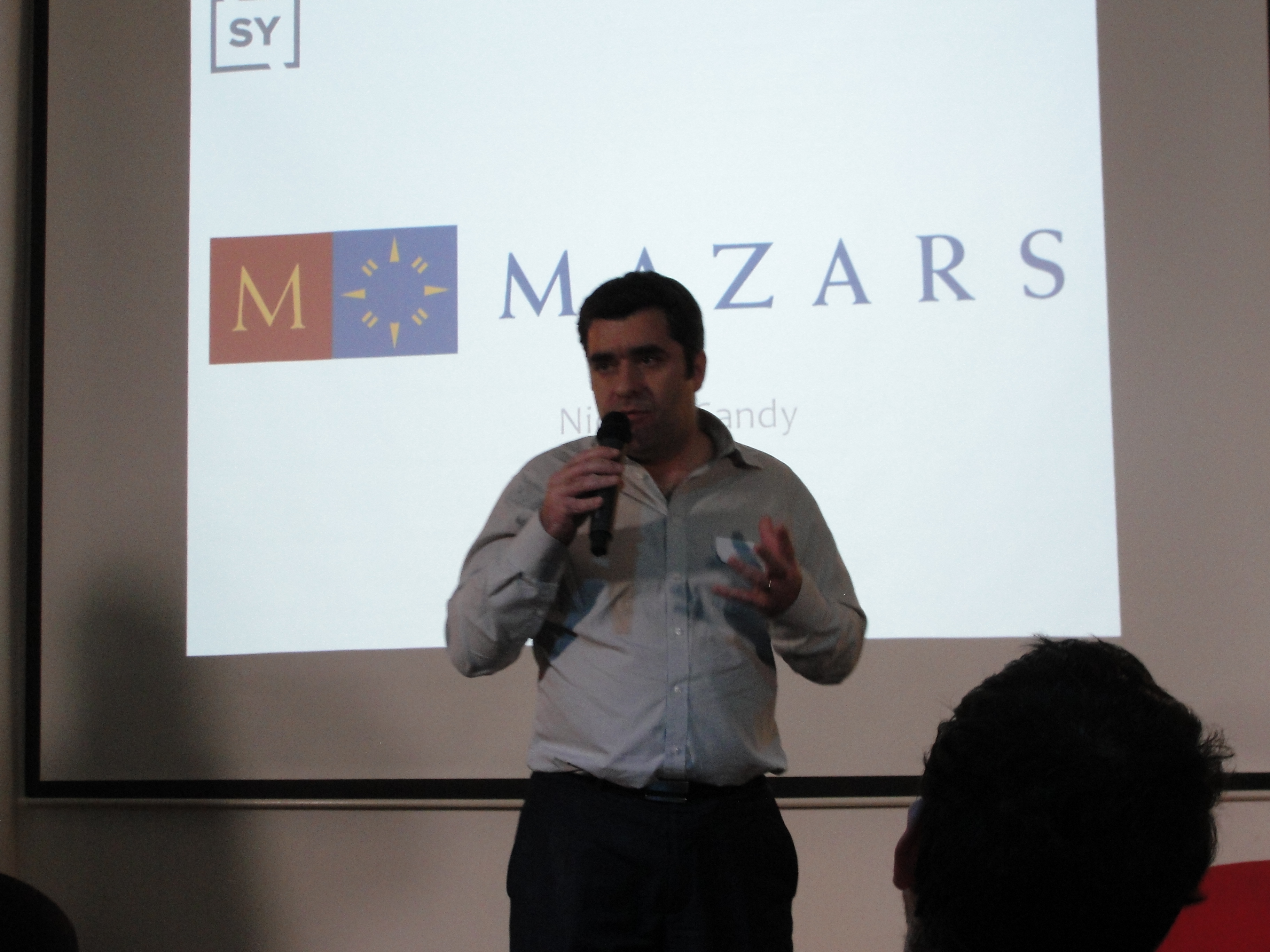
Finally, StartupYard is pleased to announce a strategic partnership with Mazars, the global accounting and consulting group with offices in over 50 countries. Founded and headquartered in France, Mazars is the 11th largest single accounting firm in the world. Their consultants will meet individually with StartupYard startups to ensure that they are taking all the appropriate legal and accounting steps as new companies.

Maloux noted of the new partnership: “even though they don’t cover the preferred topics of novice founders, tax, accounting, and legal advice are extremely important and need to be done well. I’m very happy that the experts from Mazars will help our teams to establish solid foundations, and make the best possible financial decisions early on, setting them up for success after leaving the accelerator.”

The partnership will extend for a minimum of two years, with Mazars consultants in close communication with all StartupYard teams.

Education Content Platform and StartupYard Alum Educasoft Secures Funding

Educasoft, creator of Hrave.cz and MyPrepApp, content systems for secondary school test preparation, have announced this week that they have secured a 5 figure investment from an unnamed private investor, to focus on the Czech test preparation market. We caught up with StartupYard Alum Vaclav Formanek to talk about Educasoft, MyPrepApp, and the investment process. 

So Vaclav, tell us about Educasoft since you left StartupYard.

Well, as you know, we were one of the few teams who entered StartupYard in the last round with a functioning product, and even some customers. We had been working on Hrave.cz for some time, but we were at the accelerator to build a more “global,” education product, MyPrepApp.

At the end of acceleration, we really just had a prototype, and a good sense of where we were heading next. In the first 6 weeks after StartupYard, we really had to keep working on the product, and prepare our marketing channels, Facebook registration for users (so they could sign up for MyPrepApp through Facebook), and other things that we needed to really launch a paid product. It went from an experiment to a real business in that time.

What I see as the biggest step in development since then was that we opened our CMS to partners. We want to be more than an application, but rather a platform for content creators. We aren’t the primary content creators, so we want to attract content creators by being an easy, effective platform for great educational content, that allows that content to be used by students in an effective, fun, and focused way.

We have developed some potential content partners as well, ranging from regional content developers, to one content creator who is focused on a single university. I really enjoy seeing how the product scales so well to these very different uses.  The content partners we have attracted really know good content, and they are interested in piloting the use of Hrave/MyPrepApp to publish content on their markets. These early partnerships are really important for us in validating this business model.


What are some of the difficulties you’ve encountered in repositioning Hrave.cz as a more global product?
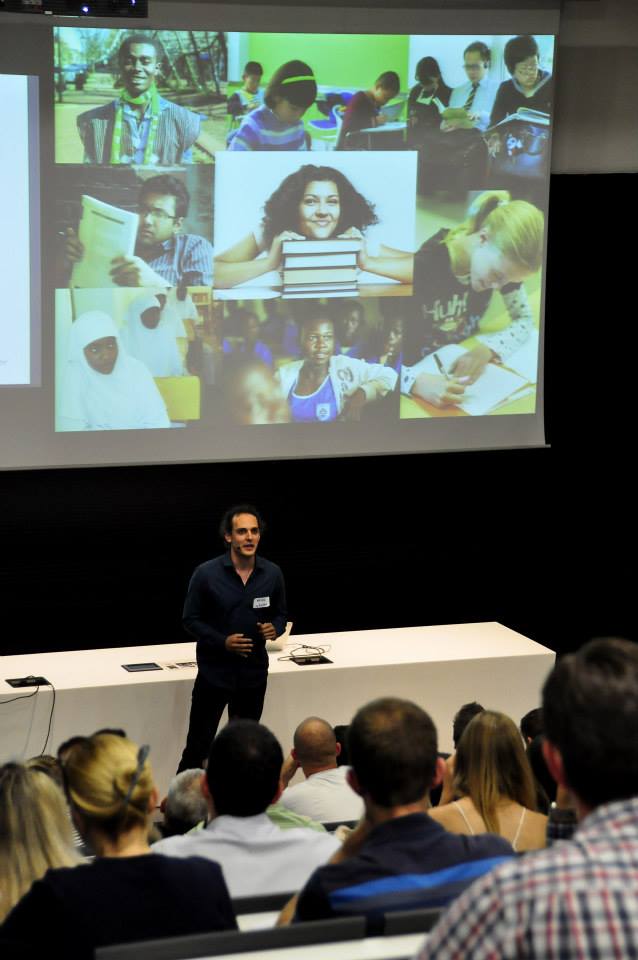
Vaclav Formanek talking MyPrepApp at StartupYard Demo Day 2014

Vaclav Formanek talking MyPrepApp and Educasoft at StartupYard Demo Day 2014

Well, Hrave is essentially the Czech local version of MyPrepApp, the global product. It has acted as our laboratory, in a market we know best and can easily test in. The goal for the next 6 months for us is really to learn how to do business in the Czech Republic.

We left StartupYard thinking that MyPrepApp would be a more global product, much sooner. But we’ve learned that we need to spend more time on the local market before scaling globally. We don’t see this is a failure, but to be honest, it was difficult to convince investors that we already had a winning strategy for a more global product, and they had good points. We needed a stronger testbed for the product, to allow it to mature over a longer period. So we’re growing more slowly than we thought we could be, but this change of direction was, I think, still the right thing.


Was that a disappointing outcome for Educasoft?

I am a bit disappointed by this, but I chalk it up to experience. It wasn’t catastrophic for us, at all. Our future doesn’t depend on being a global product overnight. We still got to take advantage of the exam season in Czech Republic, and we are still growing. We also got to slow down and build our team more slowly, which allowed us to make some smart hiring decisions. We have recruited some great developers and business managers who we might not have found otherwise.

We got very deep into discussions with a few investors. This process really reshaped the business, and talks with investors did give us good ideas. But it took a lot of time and energy, and we weren’t able to arrive at terms. That was hard, but I’m glad we went through it.


Why is innovation so important in the Education field? What are you doing that major publishers like Pearson can’t? 

What I see as most important is that education has to somehow follow the trends in students’ lives. Modern students consume and interact with content in very modern ways. If the  educational process wants to be successful, it needs to be tailored to the way that people interact with the world today. That is not really the way education currently works.

Educasoft is about providing the best educational content possible to each individual student. Not all students are lucky enough to have great teachers, and we hope that technology will fill that talent gap- making good teaching available to every single student. Some teachers are fun and interesting, but some aren’t. We want to bring fun and interesting ways of learning to every student. So our goal isn’t just to reform the education system from above, but to reach students on an individual level, and then do that as many times as we can.

I think when it comes to major publishers, the difference is that they don’t see being fun and enjoyable as an important goal. They only see outcomes: students are statistics to them by necessity, but we think about our products on a much more human level. We are motivated to be engaging and fun, and we are closer to the students, making that possible for us in a way that it isn’t possible for major publishers. Agility is a huge advantage when it comes to innovating in education. We’ve done questionnaires, and they get huge response rates- 10% of our users respond. And the thing that comes out of these is that students want customized study plans, which really stears our development in a very flexible way.

The way we will find success and survive is to be accountable to the students first- not to the system that they inhabit. That is fundamentally different from how major content publishers work. It’s not just about persuading a huge district or a school to buy our content, but about appealing to each student with content that speaks to them. We can communicate also with individual teachers, and actualize their feedback in a much shorter time. So I feel that we are living closer to our students’ real needs of today. That’s not something a major publisher can do, or even has a reason to do.

Vaclav Formanek, getting passionate about education.

Vaclav Formanek, getting passionate about education.


Let’s talk numbers! What kind of traction does MyPrepApp/Hrave have? 

August was the first month from which we have real data. 1,100 registered users, which is 6% of the target group for Hrave.cz. 20,000 students retake maturita exams in September, and we got 6% of them, with a 2.5% conversion rate. We were hoping for better, but we learned a lot from that first push.

Now the new school season has started, and Hrave has 10-15 new users every day, about a thousand since September. The numbers are still pretty small, but we’re improving our conversion rate between visitors and registered users. We’ve been able to track our website changes and leverage them to significant increases in the conversion rate. We’ve also established a really good track record for technical issues- we haven’t missed any sales due to technical issues at all.

Visit time averages for all users was over 16 minutes since September, and we have a 40% returning user rate, which we are really happy with. What I also see as a good thing is that we’ve started learning how to study user behavior, and increase our conversion rate. We’ve established some gamification elements to sell licenses, and we’ll keep perfecting that.

We’ve also learned a lot about A/B testing for email marketing, and we’re in a much better position now. This is how lean startup methodology works- we meet every week, and we always start with 10 key metrics. Everyone in the team has to see how they “move the needle,” and influence the metrics in a positive way. It’s very motivating.


You recently closed an investment. What has been the hardest objection to answer with your investors? How have you solved it?

Our first investor was interested in how we were planning to succeed on the US market. That was a hard thing to tackle for us, and it led to us taking this different approach.

Our current investment is mid-five figures, and the terms were much better than with previous investors that we talked to. He really believes in us, and that has made this process relatively easy. Maybe that also means that our current plan makes a bit more sense, or is a bit more realistic when it comes to a real chance of achieving our goals.


Where do you see yourselves in 6 months with Educasoft?

There are 3 big goals for us in the short term. First, we are developing a “multi-player arena.” Imagine Mortal Kombat, but with a study prep angle. We think that will have great viral potential, and it’s something we are exciting to test.

Second, we want to leverage the content we already have for content marketing, to generate more traffic for our paid product. Good interactive content glossaries that are focused on explaining of key terms any student need to know to pass a particular exam are lacking in the Czech market.

Third, the tailored study plan we mentioned early. This is, I think, going to be a really killer feature. We’ll be able to convert many more paid customers if we can create an easy-to-use, intelligent test prep plan, based on actual student needs.

We also want to broaden our content base with new courses and content, including grammar school admission tests for younger kids. We are also working on a pilot program for the Polish market, because of the similarity of the test prep system there. To help us grow, we are testing affiliate marketing and content marketing strategies.

We are looking to get mid-five figure revenues within 6 months, and we have an ambitious goal in that regard. We want to nail down the Czech market fully during that time, and be in a great position to scale to nearby markets.

Ondrej and Vasek taking a break on the TechSquare swing set.

Ondrej and Vasek taking a break on the TechSquare swing set.


How did your time at StartupYard have a positive impact on your direction as a company?

We came to StartupYard with just a prototype and dreams. During the program and mentor sessions, we learned a lot about how to shape our dreams into achievable plans, and how to present these plans to other people in a way that makes them both attractive and realistic.

StartupYard had a very inspiring atmosphere. The fact that you’re there every day meeting mentors, who “made it” and you are surrounded by other teams who are just “making it” makes you believe that you will succeed in the same way.


Which of the StartupYard Mentors has been most helpful to Educasoft, post acceleration, and why?

We have been in contact with a bunch of StartupYard mentors who have been helping us with fundraising. Director Nikola Rafaj is one person who was extremely helpful and supportive for us during the investment negotiation. In the last weeks we have been consulting about investment terms on almost daily basis and I am sure It would have been much more difficult for us without him. Thank you, Nikola!


StartupYard Mentor Philip Staehelin: “Rapid Change Creates Opportunity.”

Philip Staehelin is one of StartupYard’s most popular mentors, and a very long-time Prague based expat, with experience in a diverse range of businesses. We caught up with him recently to get his take on mentoring with StartupYard, in advance of our Accelerator Open House, taking place on Thursday, Dec. 4.

Philip, you’ve got an amazingly varied background and career. Swiss-American, born in New Zealand, educated in France and the US, and based now in Prague, you’ve been at A.T. Kearney, T-Mobile and UniCredit, and you’ve invested in startups and real estate. What inspires you to stay in The Czech Republic?

I’ve been based in Prague for the past 20 years. My wife likes to think I stayed because of her (she’s Czech), and while I don’t reject that view (openly), the more well-rounded answer is that the Czech Republic is a dynamic place with a very high standard of living. Obviously, things have changed tremendously since 1994 when I arrived, but that’s been part of the fun. Rapid change creates opportunity – and with a strong drive and lots of hard work (and throw in a dash or two of creativity) – I was able to capitalize on the opportunities that came my way. It’s been a fantastic 20 years.
Tell us a bit about your entrepreneurial ventures. What have been your biggest successes and failures in that arena?

A: I founded my first startup while I was studying at INSEAD in 1999. Four fellow MBAs joined my team, as well as the CEO of the investment bank where I used to work. I thought we had a killer team with the perfect concept. We raised some angel financing so we could launch the mixed offline/online, PC-based, ad-serving product… when the internet bubble burst. The business model became rather toxic from one day to the next, making further progress nearly impossible. I shut it down, returned 70% of the money to the investors, and eventually sold the IP a few year later – more for closure than for money. The bubble bursting certainly wasn’t the only reason we failed, but it’s a nice excuse. I learned a lot of valuable lessons in that first venture, even if it didn’t make it too far.

In terms of biggest successes – I would briefly mention two. #1: I bought a house in 2000. After fixing it up and living there for a few years, I ended up tearing it down and built 4 terrace apartments on the lot. The house won the Gran Prix of Architecture award for 2008, and the project ROI was fantastic. #2: A more traditional startup entrepreneurial success is Video Recruit (www.video-recruit.com). I founded the company with a partner nearly 4 years ago after coming up with an idea on how to revolutionize the recruiting space. The real coup was finding the right partner (now the CEO), and together we put together a solid core team, raised the early stage financing and developed a solid rollout and expansion strategy. The company has gradually built a global presence, and in November 2014, the company secured EUR 1.5m in new financing to help scale up globally. It’s a work-in-progress, but it’s an amazing company with huge upside potential. I believe it can become one of the true Czech startup success stories.

What do you get out of mentoring at StartupYard?

A: Mentoring at StartupYard is really fun for me. I love interacting with the teams, hearing the ideas, critiquing the strategies and business cases, and feeling the energy of people with creativity and passion. I also like to see how the teams engage with my ideas and challenges. And finally, in the cases where all the stars align, I invest in a team – the most recent being Gjirafa, the Albanian search engine.

What value do you feel your mentoring provided to the teams you’ve worked with?

I’ve worked in many different industries in many different roles, so I can bring a big picture perspective when necessary or dive deep and challenge the business model, business cases, or commercialization strategies. Some teams need guidance in defining a real sales channel strategy, whereas others need help with building a solid business case that will speak to investors. In some cases, I’ve pushed teams to completely rethink their value proposition – using what they’ve created but coming at it from an entirely new direction. I make what I hope are helpful suggestions, supported by logic, experience and intuition… and of course, teams are welcome to challenge me back or ignore the advice altogether. At the very least, I hope to prepare them for the hard questions potential investors will ask in the future. Overall – I must say I’ve had a warm reception from every team, every time.

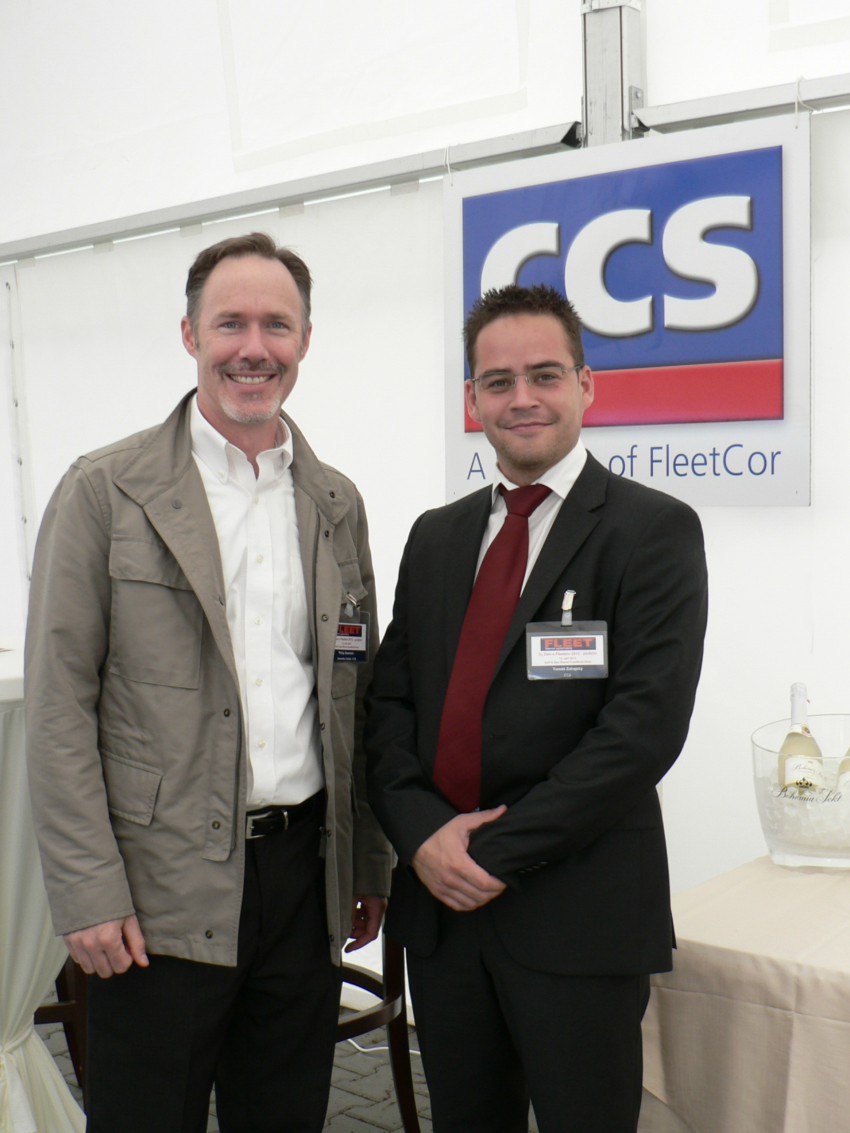
PhilipStaehelin,generálníředitelCCSaTomášZahajský,manažerprovelkézákazníkyrtxt13368

What skills or tools do you feel the teams you’ve mentored have lacked most? What do they need to learn?

To generalize, most teams are very small and by definition they lack some skills or tools as they get started. But if we go beyond this obvious statement, I think that teams don’t necessarily lack skills or tools per se, but rather they simply lack business experience.

For instance, I’ve seen a lot of teams that lack a clear sales strategy or lack an understanding of how difficult and expensive the sales process will be – especially in B2B concepts that are too complex for online sales or telesales. The ideas can be great, the management team can be strong, the technology solid… but some concepts will require a door-to-door sales force, with long sales cycles, and sales teams that will need to be properly managed and incentivized. This is often a step that has not been properly developed, but it’s a key step when developing a business case.

I’ve also seen a lot of teams that have a very difficult time putting together an investor pitch. Getting them to boil down their concept and value proposition to a few, easily digestible but stimulating slides is extremely challenging. That’s often hard for seasoned professionals to be honest, so helping a team to think more from an investor’s perspective can be a good starting point. Startups simply need to learn to summarize their amazing ideas properly – not providing too many unimportant details and making sure the key value is clearly visible.

Have you stayed in contact with any of the teams from previous cohorts? If so, what prompted you to go the extra distance?

I usually follow up with a handful of the teams after my official mentoring engagement is over. I’m usually curious how they’re developing, I want to know if I can be of any more help, and I also may want to know if there’s the potential for an investment.

Accelerators are a really recent development. If you were yourself at 25 and had a project, would you apply for an accelerator? Do you wish now that a StartupYard had existed when you founded your first company?

I think the concept of accelerators is fantastic – and I absolutely wish they’d existed when I launched my first company. Of course, there will always be startups that don’t need an accelerator – especially those startups with more experienced teams. But for the majority of startups with young, highly motivated, inexperienced teams, the value that an accelerator can add at the early stage of a company’s existence (or pre-existence) can be critical. The accelerator can provide that extra impetus to a team that will give them the confidence and the tools necessary to have a real chance at creating a successful company.

What is the one piece of advice that you seem to give the most often to young entrepreneurs, and why? 

Although I always tailor my advice to the specific challenges the entrepreneurs face (and I definitely want to avoid sounding like a broken record), I guess the one piece of advice that does surface more often than not regards the definition of the core value proposition. I referred to this earlier, but to put it succinctly, many teams have a hard time developing a conceptual elevator pitch. Spending the time on this exercise at an early stage is always time well-spent in my opinion, not only because you might get the chance to pitch the concept to an investor or strategic partner at a chance meeting, but even more because it helps to crystallize the essence of what the team is developing, so that the team itself will be able to understand where it needs to focus. This can be hard – especially for technology focused teams where there can be a disconnect between having a cool platform and serving a real need (or “scratching a real itch” as I like to put it, which leaves more room for meeting unrealized needs). When the teams find themselves under stress and worry about resource and time constraints, they can refer back to the elevator pitch (in essence, the blueprint of their business) to make sure they’re going in the right direction and not on a tangent. I’m not saying teams shouldn’t pivot – many teams should pivot – but that decision needs to be explicit, and not just an accidental drift into a new strategy. So the bottom line is: “Know where you’re going, and know why you’re going there”. 

Cedric Maloux: 4 Tips for Targeting Your Elevator Pitch

We’ve gone in-depth in the past  about honing your pitch, crafting a position statement, and talking about your ideas in clear, relatable ways. Today we’re going to talk about what I’ll call the “Targeted Elevator Pitch.”

By the way, 20 Teams signed up in just 3 days this past week, to be a part of our Dec. 4th “Pitch-Off,” as part of the StartupYard-Node5 Accelerator Open House. Out of these, we have room for less than half, but each team will pitch for just 90 seconds, with no slides or other visual aids. If these teams can deliver a perfect Elevator Pitch, then 90 seconds should be easy.


Cedric Maloux pitching StartupYard

Cedric Maloux pitching StartupYard

We all know the elevator pitch of course. It’s the 30-second version of your pitch that tries to position your company with an investor, and sell them on the idea, if not the whole investment, within the space of time it takes to get from the ground floor to (hopefully) the penthouse.

You’ll deliver this version of your pitch in so many situations, and so often, that you may lose sight of its real purpose, which is not really to grow awareness of your company or your ideas, but instead to generate interest so your audience will be hungry for more and become your allies in your search for investment, partners, and other opportunities.

The problem is that it’s hard to keep in mind that different people will hear your elevator pitch in very different ways. Some people may be impressed by you and your status as an entrepreneur, while others may be having bad day, have heard too many pitches recently, or are not interested in your idea for the same reasons that others may be. Finding and exploiting the interests of your target are key to your success.

The elevator pitch is about aligning your audience to you, grabbing your audience’s attention in one sentence. How can you bring them to your level? You’ve been living/working/researching your subject for months, even years, and they have not. How can you bridge that gap in one sentence, and make sure they go from not knowing who you are, to being eager to hear what you have to say? The last thing you want to do is start blasting who you are, what you do to someone who is not fully ready to listen.

For this reason, the first sentence of your pitch should not be about you but WHY what you are about to say after is interesting/important/relevant/sensational/worth listening to. Your mission is to grab their interest in less than 5 seconds. Once you put them in that place/time where you know they are truly listening, then you can deliver your pitch efficiently. Otherwise you might as well talk to the wall. Psychology studies can help us here a lot as we’ll see.

So here are 4 keys to targeting your elevator pitch, so you’ll be sure your audience is ready to listen to you.


The elevator pitch is also suitable for most Prague escalators.

The elevator pitch is also suitable for most Prague escalators.


Create Consistency

People have a general desire to appear consistent in their behaviour. A famous set of experiments has shown that when someone is asked a hypothetical question, such as “would you consider volunteering for X cause?” No matter their initial answer, they are over 25% more likely to agree to volunteer after being asked directly, than those who are not asked the question hypothetically first.

This is commonly known as “foot in the door,” psychology, or the consistency effect. That is, if you ask someone a hypothetical question where the obvious answer is positive, then they are much more likely to answer positively when asked more direct questions.

Think about it: If someone called you and said: “Hi, do you think it’s unfair that telecom companies charge so much for data roaming in Europe?” If you’re like me, you’d say “hell yes, it’s totally unfair, and it makes me crazy.”

Now consider what would happen if someone called you and said simply: “Are you interested in getting the best data roaming rates in Europe?” :Click:

But in the first case, since you’ve already answered once with a yes, you will be much more likely to allow the salesperson who posed this question (and showed some affinity for your feelings along the way), to finish their sales pitch. You might still not buy, but you’ll feel much more inclined to listen attentively. This is the power of the consistency effect, and the building of rapport with your target. Getting a person to answer “yes,” to anything; literally to almost any question, is better than launching into a pitch directly. Saying “this traffic’s crazy… isn’t it?” Is better than nothing, and the more you can show that you share the interests of the target of your pitch; the more specific you can be in eliciting a positive response, the better.


Ask a Data Backed Question – Reach out to their logical brain

A fact is worth a 1,000 opinions, and when it comes to pitching, your audience is more likely to be interested in facts than in your opinion (who are you anyway?). For this reason, starting your pitch with strong data as an introduction is a great way to appeal to their intelligence, and make them realize that what you are about to say is big/important. A data backed question is a great way to grab their attention.

“Did you know that the worldwide mobile gaming market is going to be worth $10 Billion in two years, and that 52% of casual gamers are women?”

This has two immediate effects. First it shows your target that you do know how big a market you’re talking about, and it also shows that you may have an insight or an angle on that market that is unexploited, or has hidden potential that you can unlock.

There was a great example of this in the pitch from founder Nikola Todorovic of Warrant.ly, one of our 2014 alumni. He asked: “Did you know that X Billion dollars a year are wasted in unclaimed warrantee payouts, and that most of this money is wasted because consumers lose track of their paperwork?” That’s a very powerful question. There are potentially billions of dollars being left on the table, because the warrantee system is so broken. And that’s a prospect that is always attractive to an investor.

business-bar-chart-1392339-m


The Power of Because

Dr. Robert Cialdini writes in his 1984 Best-Seller Influence, the Power of Persuasion, about the power of “because.” Below is a synopsis of his position:

It’s a well-known principle of human behavior that when we ask someone to do us a favor (in our case, listening to our pitch) we will be more successful if we provide a reason. People simply respond better when given reasons to do something.

A famous set of experiments asked grad students to request that riders on the New York subway give up their seats. Students who were tasked with asking for seats for no stated reason, had minimal success, and were even drawn into verbal conflicts with the people they asked. However, when students were allowed to ask for a seat, while giving an innocuous reason for doing so: “I am tired,” “my legs hurt,” riders were overwhelmingly willing to accommodate the them.

The effectiveness of this request-plus-reason is nearly total: Ninety-four percent of people asked in a similar experiment, if someone could skip ahead of them in line for a Xerox machine “because I’m in a rush,” allowed the experimenter to skip the line. Compare this success rate to the results when the request is not justified. Under those circumstances, only 60 percent of those asked complied.

Subsequent experiments further showed that the specific reason was not as important as the specific word “because.” In fact, if the experimenter simply stated that they wished to skip the line “because I need to make copies” (which is not a justifiable reason for skipping the line to a copy machine), 93% of subjects still conceded their place in line.

So give a reason to your audience to listen to you by using the power of because. “Let me tell you about our project because….” Try to use a valid reason but remember that it does not matter as much as you might think. They now have a reason to listen to you.

These are just 3 simple tips. At the end of the day, put yourself in the shoes of the person in front of you. Is what I am saying interesting because I am saying it, or is it because I can justify its interestingness? You surely have been in a conversation where people were talking to you, and you are just day dreaming or nodding along, but not listening. The reason might be that they did not include you in the conversation: they didn’t make it about you. This leads us to our 4th tip.


Excluding To Better Include

Another way to include someone in your thinking is to actually exclude the person from something else. “I know you are not the target audience for this, but did you know that….” This intro is very powerful because the recipient mind thinks: “I’m about to learn something new here. I better listen”. We all like to learn new things and grow as smart people, so if you tell a person they don’t know something simply because they have not been looking at it, they are much more likely to listen and decide for themselves. But they have to listen to you in the first place to do that!

Pitch StartupYard Investors and Mentors at the Accelerator Open House

Nearly 100 people have already signed up for our Accelerator Open House, Dec. 4, which celebrates our recent move to Node5, and the opening of StartupYard as a more public resource for local and regional startups, and features exiting Chairman of Microsoft Europe, Jan Muehlfeit, who will deliver keynote remarks.

In addition, we’re happy to announce that we will hold a “pitch-off,” inviting entrepreneurs who can attend the event to pitch their ideas in front of StartupYard mentors and investors, programmers and entrepreneurs. Pitches will be 90 seconds, and will not include demos or slides. It’s just you, your charm, and a microphone, in front of a full house.


Applications close this Friday, November 28th (Edit: Applications are now closed).

This isn’t a contest, and there’s nothing to win, but rather an opportunity for you to pitch an idea you may be thinking about, or a startup you’ve been working on, and see whether it peaks the interest of investors, mentors, or others at the Open House. Your pitch will hopefully be the start of a conversation that may see you joining the StartupYard accelerator, or having further talks with potential partners, advisors, or investors.


10489852_799591486725508_6883063992409343071_n 10413339_799591643392159_3497601133066230384_n

From Finland to Romania: What All Startups Have in Common

I’ve spent the past week at two conferences: Slush in Helsinki (aka: the geekiest rock festival in northern Europe), and HowtoWeb, Bucharest’s more demure, but also far more grounded take on a startup conference. Both events were enlightening to me for entirely different reasons. Here are a few observations on what I learned at the two conferences:

Everyone has Suddenly Discovered Community Management

Slush and HowtoWeb both had significant gaming communities in attendance, and it seemed that when companies like Dots weren’t talking about monetization strategies, they were talking about community management. Game design studio Seriously revealed a new approach to mobile gaming content, where the company will rely on its user community to help shape the experience of its game, iterating not just the software, but also the content, based on how users engage with it.

At HowtoWeb, the picture was much the same. I fell into conversation with Dan Olthen at HowtoWeb, about this change in the gaming community. In fact, his talk on producing a new Game of Thrones game for Bigpoint included his interest in community management as an integral part of pre and post-release QA for a game. He advocated for community managers to be involved with product design, particularly with UI, and to be part of every decision involving QA and product design. Feedback from communities, and the post-release lifecycle of a game are now much more important than they were 10 years ago, when a game might be released once, and never updated again. This reasoning applies to a most mobile products, Dan told me, but many companies seriously lack an understanding of how to integrate community managers into a product release lifecycle, meaning that when new mobile products *are* released, the people dealing with those communities often don’t have their fingerprints on them, making them poor advocates for something they don’t have any personal stake in.


Startups Still Don’t Know Why They Need an Accelerator

We’re going to get into this more deeply in a blog post this week, but I’ll mention it right here: Startups don’t know why they need an Accelerator- and the ones that do seem to be aware of what an accelerator can offer, often need us the least.

I spent quite a bit of time, particularly at HowtoWeb, talking to my opposite numbers from other accelerators like Techstars, and from VC firms in London, Berlin and elsewhere. The consensus was clear: too many startups with too many good ideas go too far into developing their products and seeking investments, when an accelerator would help them to narrow their focus, find out what kind of investments they really need, and prepare them to ask for it. Many seem to have become fixated on a particular investor who mentioned the possibility of money, but hasn’t invested yet. As one VC from London told me: “we talk to them and tell them, ‘this is what we did with a *similar* investment, but that doesn’t mean you’ll get the same valuation, if we invested,’ and anyway the startups walk away thinking that they have this valuation we mentioned even when we haven’t even agreed to invest.” Of course, by the time that founder talks to an accelerator, 30,000 Euros for 10% equity seems insulting compared to a theoretical post-money valuation they haven’t earned.

From Finland to Romania: The Picture Stays the Same

HowtoWeb, a tech conference for mostly Romanian startups in Bucharest, had mentoring sessions across two days, so I talked to about 15 startups at the conference, and about half had unrealistic ideas of what a VC firm could do for them. None had even applied to an accelerator. A few expressed that they didn’t want to give up equity (despite having no investors, and thus no valuation), and others were simply unclear as to what we could provide them that they couldn’t get directly from a VC.

While many more companies in Helsinki had secured seed investments or even A-rounds, there were still loads of them who hadn’t, and they weren’t looking to join an accelerator.

I think this is quite a shame. The VC mentors in attendance seemed far more likely to tell startups to simply quit- that their ideas are not good enough, and that they would never invest in them. The Startups I saw in Romania may have had fewer conversations with VCs, and they might have had smaller pocket money, but they had essentially the same illusions about VC investments versus accelerators. They still didn’t see the value in an accelerator.

VCs and Accelerators all ultimately invest in human potential- in people. But we go about it in very different ways. Accelerators help founders shape a business and prepare it to be investable- we validate the basic questions of viability: is this even a good idea? What is the competition? How much money is needed?. But a VC is not as interested in that process- they are interested in companies that already have those questions solved. They have to be moving from point B to point C, have a direction, know it, and be able to show that it has promise. So talking to them before you know what they want from you, before you know what step A is, much less step C, is only going to doom you into being either led on by their vague promises, or disappointed and disillusioned at their firm reply of “no way.”

An accelerator invests in you up-front, and then our work starts. WIth a VC, the decision process is much longer, and it constitutes most of their work deciding whether to invest. Once they’ve invested, they want that investment ideally to work without depending on them for anything else. But in order to do that, they have to be very sure about it. We take bigger risks, but we work harder to make sure that you deliver on your potential.


A lot of Founders Think They’re Still in School

This is something else we’ll talk about in a future blog post, but it bears mentioning here, because we saw it a lot last week on the road.

Founding a company is not like being in school. But a lot of people who found companies we’re interested in accelerating are still in school. And this can show in a few ways. A very young founder I met in Bucharest, with a very interesting business idea and a great deal of technical knowledge, responded very oddly to a comment I made about his approach to the business. He wanted to start a kickstarter campaign, and start selling a very complicated physical product that he had not figured out how to mass produce, market, guarantee and insure, service, and price appropriately. 

In short, he didn’t know what he had from a business perspective. I told him not to start the kickstarter campaign, but to slow down, look for a business partner, seek some investment, and figure out how to market and sell his machine as part of a profitable business. He kept returning to a monologue about how he was going to start this kickstarter campaign and get the investment that way. I told him it would work (getting the investment), but that he would be defeated by the details of producing, selling, and supporting this product if he went it alone. He said to me: “but, I’m only 20 and I think I have a lot of experience and am doing pretty well for my age.”

He was treating the whole thing like a school assignment. He was probably used to being told he could do anything, because he was ambitious, smart, and exceeded the expectations that schools and universities had placed on him. But business has no such expectations. Businesses either turn a profit or they lose money. They don’t succeed because you’re precocious, and they don’t forgive you for mistakes you made at the beginning- they punish you for them. Youth convinces us that we know everything, but the more we learn, the more we understand how little our knowledge amounts to.


Startups with No Money Are Usually the Wallflowers

IMG_0908


At Slush, the orgiastic celebration of all things technology that has put Helsinki on the startup and gaming map in the past few years, as I strolled past hundreds of booths and stands occupied by alternately hopeful, overwhelmed, meek, and overconfident startup founders talking up their products and their prospects, I found a sort of rhythm. While the technologies they were all working on were as various as the people themselves, they all seemed to more or less fit a few different “types.” Not as people, or even as businesses, but as founders. The selection was diverse: language acquisition apps, big-data and internet-of-things health and wellness companies, social media me-toos (though there surprisingly few), game designers and media companies were all represented. But the type of company they were didn’t seem to affect the way they behaved.

It seemed to me after a few hours that I could tell what stage a company was in, just by the way they treated the people walking by. Few of the startups had no money to work with, or else they wouldn’t have been able to buy tickets for their booths, but it became clear after a number of conversations, that more than a few companies were operating on a shoestring budget. What surprised me about many of these companies was that their founders were standoffish. They neither engaged with passersby, nor roped them into their booths to display their wares. They just waited, responding only to direct questions. 

I expected, when I talked to people who didn’t seem interested in hearing about StartupYard, and asked no questions about the accelerator, that they must already have funding, and were looking for other types of contacts, or bigger investors. But most of the ones who didn’t ask questions didn’t have any major investors. That seemed incredibly odd to me. I represent investors, and make this clear, and that they probably desperately need investment to move forward, but more than a few seemed glassy-eyed at the prospect- as if they were sure it wouldn’t work out.

I mentioned this to another rep from an accelerator in Germany. “I know!” he said, wonderingly “It’s like we’re chasing them around trying to give them money, and they think we’re going to steal their lunch.”

Well, we won’t steal your lunch. Unless it’s pepperoni pizza, and in that case, watch out.

Companies with Angel Investors are the Most Friendly

I noticed too that companies that did have significant angel money were interested in talking to me, even though they had little reason to do so. I got 10 minutes into a conversation with a delightful co-founder of Lingvist (a language web app that is getting a free plug from me because they were so damn nice), before I realized that the company was way beyond the financial and organizational stage where StartupYard would be a major help. In fact, they had already been with an accelerator, and had a very good idea of how to move forward.

So why had he been so cordial with me? Because he understands something that startups without funding haven’t learned yet: you have no idea where your breaks are going to come from. I’m now a free evangelist for Lingvist, and it cost a co-founder 10 minutes of his time. If I had a check-book that was significantly fatter than my current one, he’d also have a potential investor.

StartupYard Announces Partnership With Node5, Making the Accelerator an Open Resource for the Local Startup Community

In another week of very big news for StartupYard, we can now officially announce that we have found our new home, Prague’s open-office space Node5. The move is part of a broader partnership, wherein StartupYard will become something of a public resource for entrepreneurs in Prague and throughout the region, hosting many more events and hands-on meetings with our mentors for those who can’t necessarily join the accelerator just yet, as well as a more active resource for companies that have already attended.

StartupYard Moving to Node5 - small


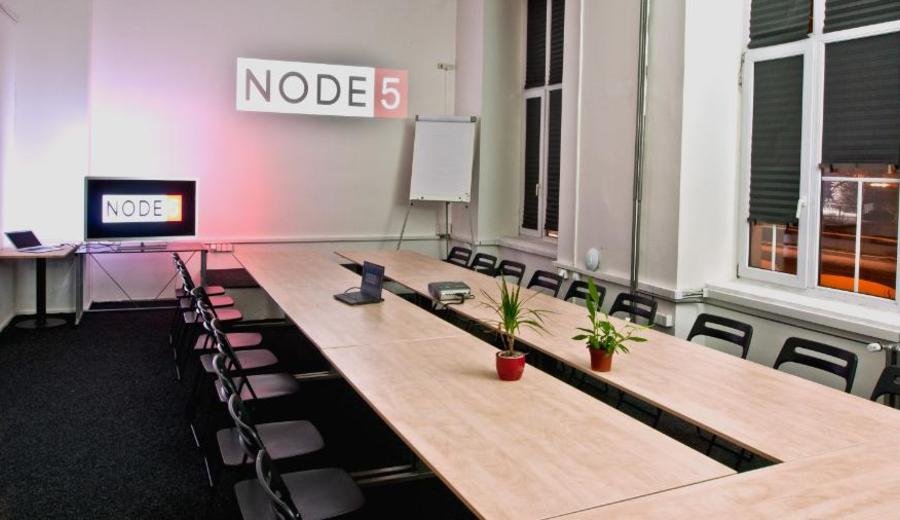
Introducing StartupYard’s new home base: Node5

In a sense, this move is a bit of a homecoming for StartupYard. Node5 co-founder Lukas Hudecek was a co-founder of StartupYard, and the two companies were originally envisioned as a single entity. We’re very excited to return to Node5, and pursue a much more ambitious calendar of public events, to really engage with the local tech community. What’s good for entrepreneurs in the region is good for us, and the more smart, capable founders who find investors, make the right decisions, and grow, the more investment and talent will be attracted to this region. Our goal is to see this happen in a big way over the next several years.


Accelerator Open House, Dec. 4, 2014 Featuring Microsoft Europe Chairman Jan Muehlfeit.

Jan  001

To kickoff the partnership, StartupYard Managing Director Cedric Maloux and Hudecek will host an “Accelerator Open House,” where local entrepreneurs, programmers, investors and StartupYard mentors will meet to discuss life in and after a tech accelerator. The event scheduled for Dec 4th, 2014 will feature keynote remarks from Microsoft Europe Chairman and popular StartupYard mentor Jan Muehlfeit, who himself recently announced his departure from Microsoft to focus on mentorship in the region’s tech community.

Sign up for the Event Now on Facebook
Or
Register at Eventbrite

Muehlfeit said this week: “After stepping down as European Chairman at Microsoft, following a very fruitful 21 years with the company, it’s a great pleasure to give back to the tech community in Prague and Central Europe, focusing on helping individuals, organizations and whole countries to unlock their human potential. Being a mentor at StartupYard has presented me with a great opportunity to assess the potential of young entrepreneurs in the region, and to have a positive impact on their growth, so I’m looking forward with anticipation to the next evolution in our efforts as a community, in cooperation with Node5.”

ondrej_bartos_400x254

Venture Capital and Angel investor Ondrej Bartos of Creedo Ventures, will be available to meet potential applicants.

Following the event, a panel of StartupYard mentors, including Ondrej Bartos, StartupYard board member and partner at VC firm Credo Ventures, Petr Ocasek, a StartupYard investor and co-founder/CEO of AngelCam, will field questions from potential applicants to the accelerator. Anyone at all interested in StartupYard, as a potential strategic partner, investor, mentor, or applicant company, is encouraged to attend, and get a sense of what StartupYard can offer the Prague tech community.


Event Details:

Accelerator Open House
December 4th, 2015, 18:30
Featuring Jan Muehlfeit, Ondrej Bartos, and Petr Ocasek
Register at Eventbrite

acceleratoropenhouse-invitation-20141204

Accelerator Open House, Dec 14, 2014


StartupYard At Slush 2014, Helsinki

An exciting first day at Slush 2014! Here are a few of our pictures and tweets from the day:IMG_0908 IMG_0910

This was the view from 9am, which is 8am CET. It was a bit overwhelming for that time of morning.

The conference is hosting a record 15,000 people, from all over the world. Particularly on display were startups in the fields of gaming, and wellness.

Talks are going on at 4 large stages simultaneously, and are being given by luminaries from all corners of the industry. The lighting is quite aggressive, a combination of red and green lasers, white spot lights, and fog, lending the whole occasion the atmosphere of a rock concert, with people constantly cycling between the stages, the packed venue restaurants, and the product booths scattered throughout he venue.

We can attest to the fact that the badges are huge, and easy to read.


I cannot confirm or deny the existence of this sauna at a startup conference.

Linda Liukas gave a brilliant talk about her evolution from a young fan of American Vice President Al Gore, into a coder and an entrepreneur.

The Slush 100 competition, originally planned as a 250,000 prize, was doubled at the last minute.

The winner was Enbritrly, with their innovative bot-detecting ad-web analysis engine.